
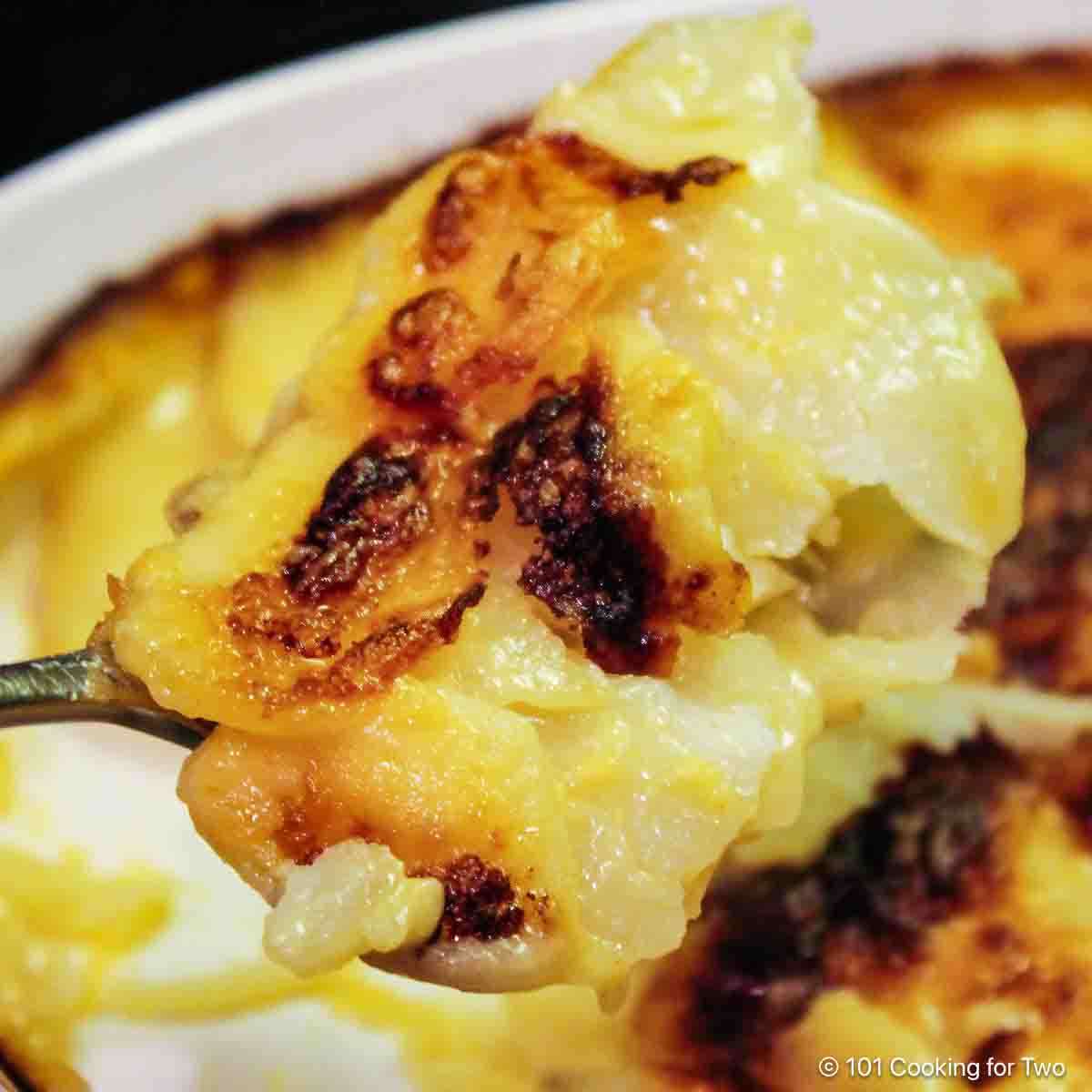
Old-fashioned scalloped potatoes with thin-sliced potatoes baked in a cheesy milk-based sauce—no canned soup. A traditional scalloped potato recipe based on a 1971 cookbook, it now scales from two servings to family size.
Jump To (scroll for more)
- TL;DR (Recipe Summary)
- 🥔 Ingredients
- 👨🍳 Quick Overview: How to Make Scalloped Potatoes
- ⏰ How long to cook scalloped potatoes
- 👨🍳 Variations and Options
- 🗓️ How to Make Scalloped Potatoes Ahead
- ↕️ Make a Smaller “For Two” or Larger Recipe and Pan Sizes
- 🥔 Other Potato Recipes
- ❄️ Storage and Reheating Leftovers
- ❓ FAQs
- 📖The Recipe Card

Featured Comment by Kathy:
⭐⭐⭐⭐⭐
"Fantastic! The only change I made was to add some sliced onions between the first and second layers. Thank you for a great recipe. Perfect for an Easter dinner…"
TL;DR (Recipe Summary)
What it is:
Traditional old-fashioned scalloped potatoes—thin-sliced potatoes baked in a cheesy milk sauce. No canned soup, just the classic method.
Why you’ll love it:
Simple ingredients, dependable results, and flexible sizing. Make it for two, medium, or a full family dinner without changing the method.
How to make it:
Slice potatoes thin, make a quick roux-based cheesy milk sauce, layer potatoes and sauce, and bake until fork-tender (200°–210° internal temperature).
Jump to the Recipe Card or keep reading for step-by-step photos and tips.
🥔 Ingredients
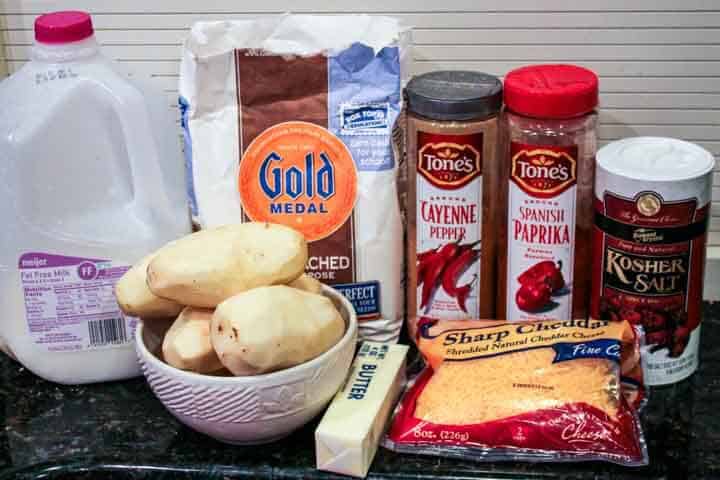
Potatoes — Peeled and thin-sliced (about ⅛ inch).
Pantry ingredients — All-purpose flour, milk, butter, and salt.
Optional ingredients — Cayenne pepper and paprika.
Cheese — Shredded cheddar is standard, but Monterey Jack or Gruyere also work. Omit for classic no-cheese scalloped potatoes.
⭐ Best Potatoes for Scalloped Potatoes
Russet or Yukon Gold. Russets bake soft and creamy; Yukon Golds stay a bit firmer with a buttery texture.
👨🍳 Quick Overview: How to Make Scalloped Potatoes
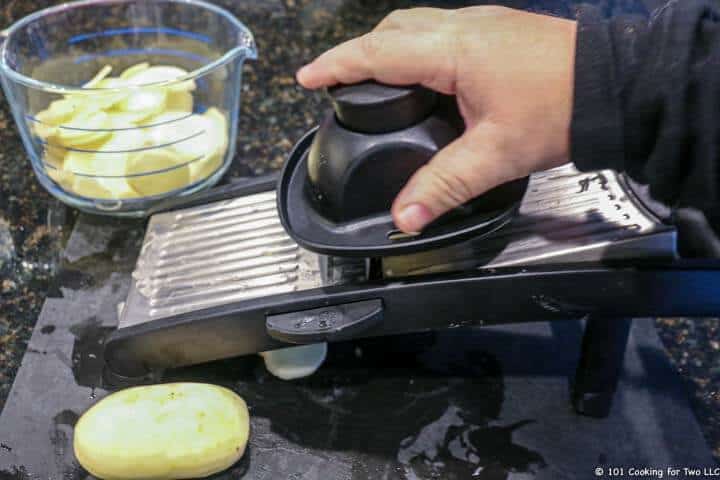
1. Prepare potatoes: Slice about ⅛-inch thick and soak in cold water while you make the sauce. Drain and pat dry before layering.
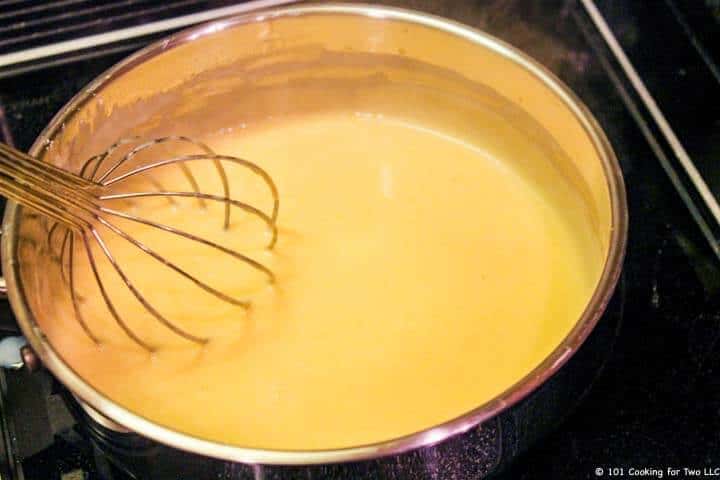
2. Make the sauce: Cook a quick roux with butter and flour, whisk in milk and salt, then melt in the cheese.
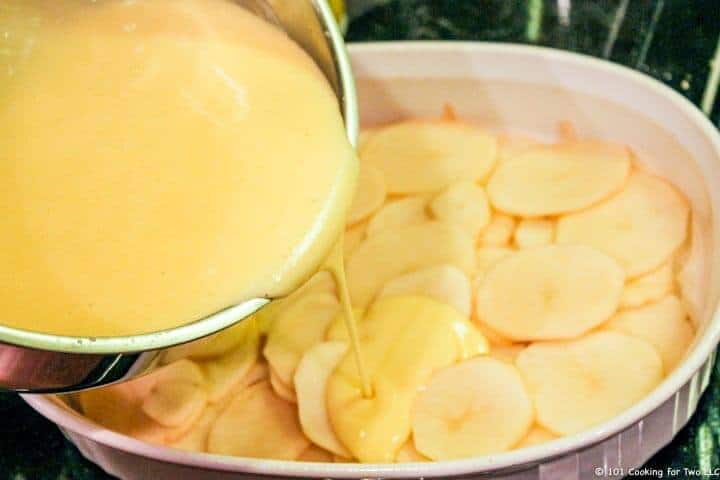
3. Layer: Add half the potatoes to the baking dish, pour over half the sauce, repeat with the second half, and finish with a layer of shredded cheese.
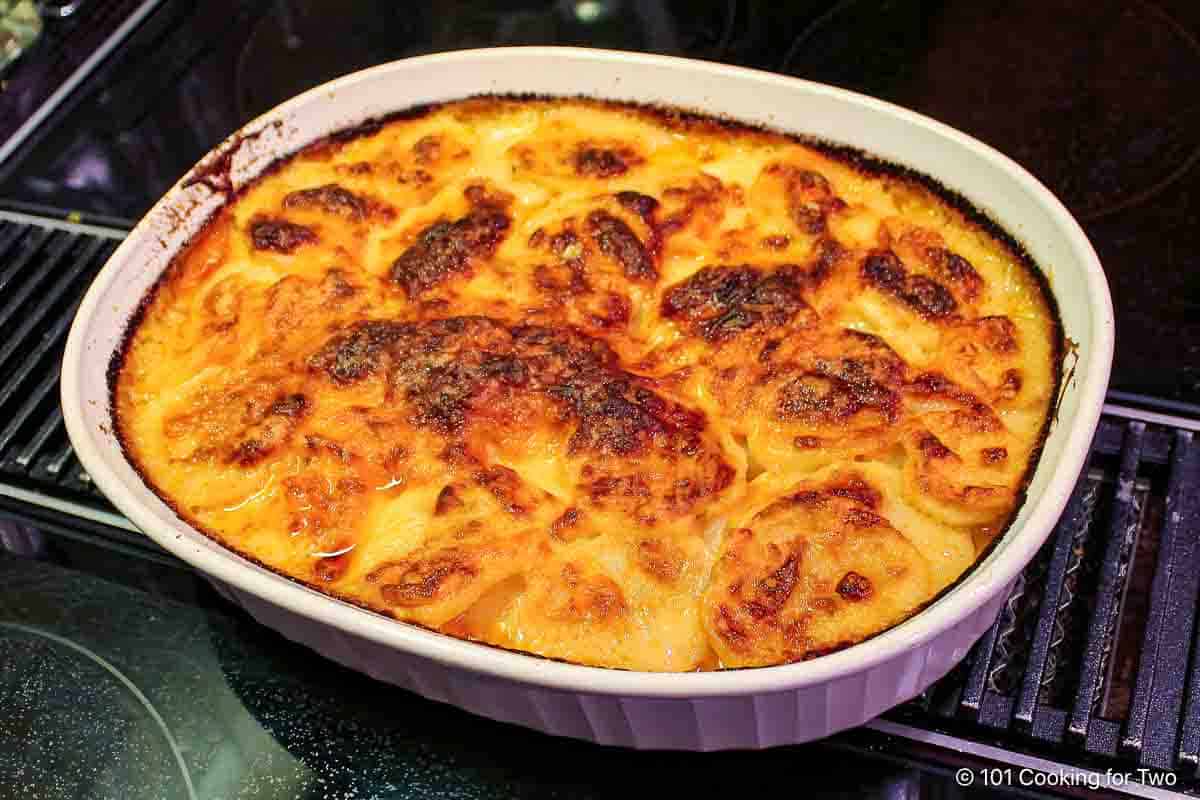
4. Bake: Bake at 350°F until fork-tender (200°–210°F), about 60 minutes. We often add 20 minutes for a creamier texture. Rest 5–10 minutes before serving.
For more details, keep reading. See the Recipe Card below for complete instructions and to print.
⏰ How long to cook scalloped potatoes
Bake scalloped potatoes for about 1 hour at 350°F. They’ll be tender but may still be slightly firm. We prefer the traditional, creamy, melt-in-your-mouth texture, so I cook them until they reach an internal temperature of 200°–210°F, which usually takes 60–80 minutes.
Pan depth, potato thickness, or add-ins like ham may add 10–20 minutes. If the top browns too quickly, cover loosely with foil near the end.
👨🍳 Variations and Options
Potatoes
Russet or Yukon Gold potatoes work best. Russets bake soft and creamy, while Yukon Golds hold their shape with a buttery texture. Any type of potato will work, but peeling is optional only for thin-skinned varieties. Russets should always be peeled.
Cheese
Cheddar is the standard choice, but Monterey Jack or Gruyere melt smoothly and work well. For a traditional version made with a classic white sauce, simply leave the cheese out of the sauce and off the top.
Save this recipe!
Seasonings
Many traditional scalloped potato recipes omit modern seasonings like garlic and onion—add them if you like. A light touch of paprika or cayenne works well, but stronger herbs such as thyme or rosemary can overwhelm the classic flavor.
Optional Add-Ins
Diced ham is the most common addition—stir it into the potatoes before layering. Extra ingredients make a thicker casserole and may extend baking time by 10–20 minutes.
🗓️ How to Make Scalloped Potatoes Ahead
Assemble the casserole completely, but don’t bake it. Cover tightly and refrigerate for up to 2 days, or freeze for up to 2 months. Thaw in the refrigerator before baking.
The potatoes won’t darken once they’re coated in the sauce, but a chilled casserole may need a little extra baking time.
↕️ Make a Smaller “For Two” or Larger Recipe and Pan Sizes
The standard recipe makes about 6 cups, which fits 6 normal servings or 4 large servings in a 6×9-inch (1½–2 quart) baking dish.
Half-size (3 servings):
Set servings to 3 in the recipe card. This smaller batch works well for most cooking-for-two households. Use a 4×6 or 5–6 inch round baking dish. Bake 30–40 minutes, checking for an internal temperature of 200°F+.
Double-size (12 servings):
Set servings to 12 in the recipe card and use a 9×13 casserole dish. Add 10–20 minutes to the baking time.
Note: Changing servings in the recipe card updates ingredient amounts, but the written instructions remain the same.
🥔 Other Potato Recipes
If you're looking for more potato sides, try one of these reader favorites:
- Crock Pot Scalloped Potatoes — same creamy texture with slow-cooker convenience.
- Scalloped Potatoes and Ham — a hearty, top-rated version built around diced ham.
- Roasted Little Red Potatoes — easy, golden, and perfect with any dinner.
- Parmesan Baked Potatoes — easy, Parmesan-crusted halves that always impress.
- Cheesy Potatoes with Real Potatoes — classic funeral potatoes made the right way, no frozen hash browns.
❄️ Storage and Reheating Leftovers
Refrigerate leftovers for 3–4 days or freeze for 3–4 months.
Reheat in the oven when possible—the microwave works, but it can soften the texture. Warm at 350°F until heated through.
❓ FAQs
Scalloped means potatoes baked in a sauce — usually a milk-based white sauce.
Au gratin means baked with cheese.
Because this recipe uses cheese, it can be called scalloped, au gratin, or scalloped au gratin. Leave the cheese out, and you have traditional scalloped potatoes.
A few things can cause firm potatoes:
1) Slices are too thick. Slice to about ⅛ inch and cook longer.
2) The casserole is too deep. A smaller pan makes a thicker layer — use a larger dish or extend the baking time.
3) Added acidic ingredients. Sour cream and tomatoes can slow softening — only add them after the potatoes are tender.
4) Oven rack too high. In a non-convection oven, keep the dish in the middle or lower third.
5) You want creamier potatoes. Bake to 200°–210°F internal for soft, melt-in-your-mouth results. See my scalloped potato and ham recipe for a discussion.
📖The Recipe Card

Old-Fashioned Scalloped Potatoes (Traditional & Creamy)
Ingredients
- 4-6 medium russet potatoes
- 3 tablespoons butter
- 3 tablespoons all-purpose flour
- 1½ cups milk
- 1 teaspoon salt
- ⅛ teaspoon cayenne pepper - optional
- 1½ cups shredded cheddar cheese - or cheese of choice
- 1 sprinkle paprika - optional
Step-by-Step Instructions
- Preheat the oven to 350°F, conventional (not convection).

Prepare the potatoes
- Slice 4–6 medium russet potatoes into slices about ⅛ inch thick. You should end up with approximately 4 cups of potato slices. Rinse in a bowl of cold water and leave them there while you make the sauce. When ready to assemble, drain well and pat dry with paper towels.
Make the roux based sauce
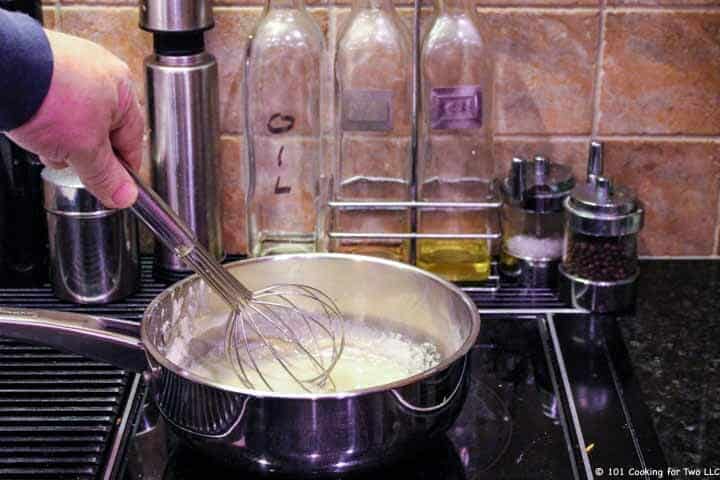
- In a saucepan over medium heat, melt 3 tablespoons of butter. Whisk in 3 tablespoons of flour and cook for a couple of minutes to make a roux. Slowly whisk in 1½ cups of milk. Whisk frequently for a few more minutes, then stir in 1 teaspoon of salt and ⅛ teaspoon of cayenne pepper (if using). Bring to a light simmer; the sauce will start to thicken.
- Reduce the heat to low and add 1 cup of shredded cheese. Whisk until the cheese is fully melted and the sauce is smooth, then remove from the heat.
Assembly
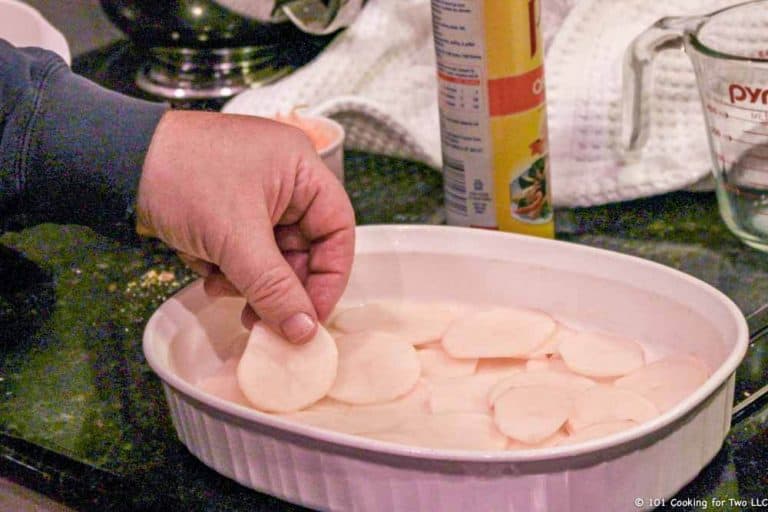
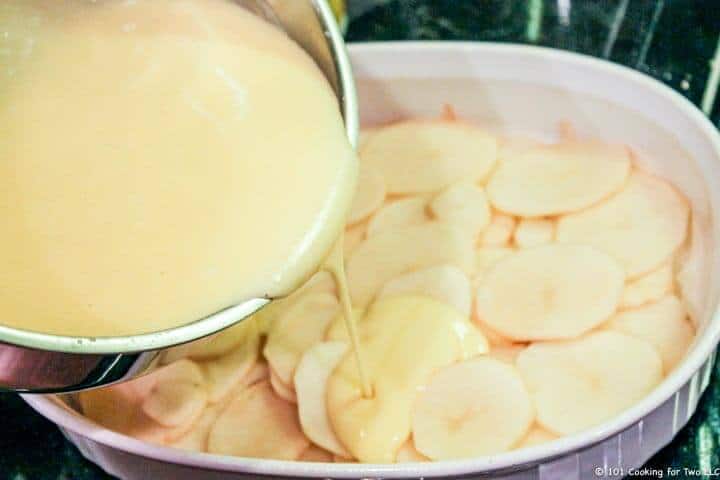
- Lightly coat a 6×9-inch (1½ to 2-quart) casserole dish with cooking spray. Layer half of the potato slices in the dish, spreading them out individually so they’re not stuck together.

- Pour half of the cheese sauce evenly over the potatoes.
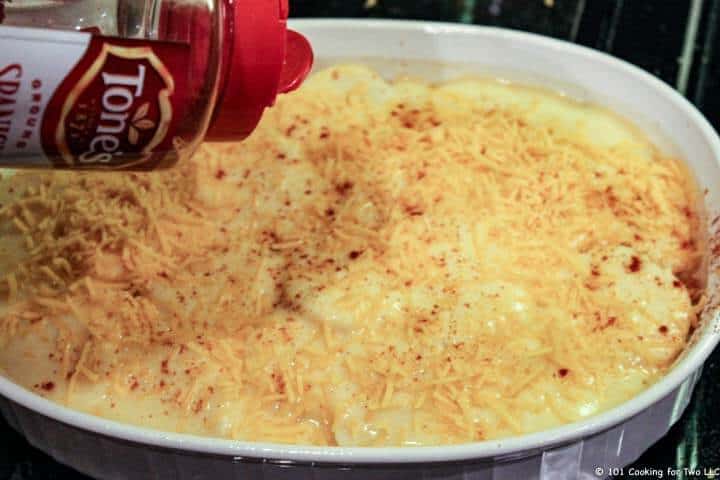
- Add the remaining potato slices in an even layer. Pour the remaining cheese sauce over the top, then sprinkle with the remaining ½ cup of shredded cheese. Finish with a light sprinkle of paprika, if desired.
Bake
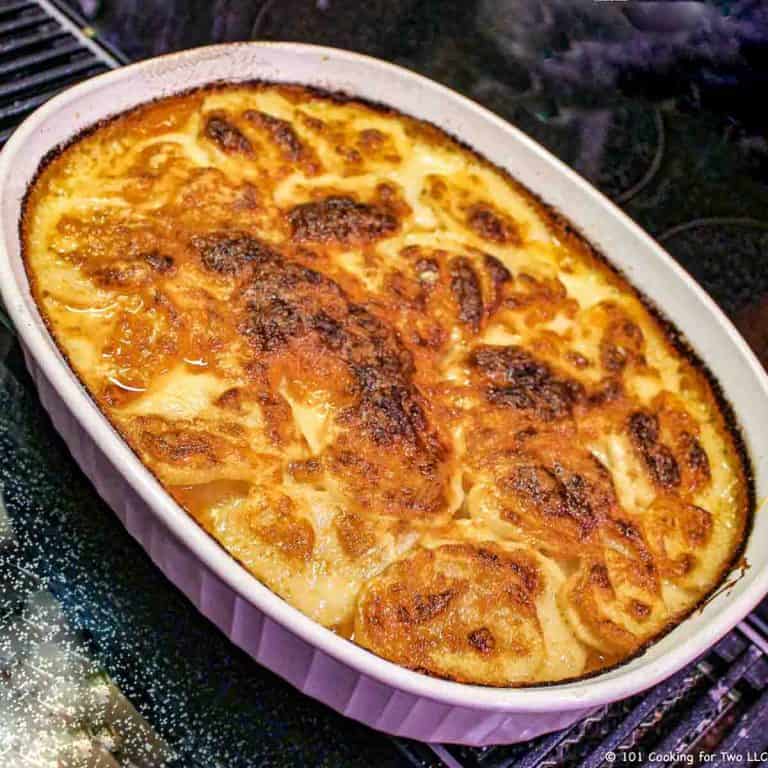
- Bake uncovered at 350°F until the potatoes are “fork-tender”—an internal temperature of 200°–210°F—about 60 minutes. We usually add about 20 minutes to achieve a creamier texture. Let the casserole rest for 5–10 minutes before serving.

Recipe Notes
Pro Tips
- All cheese is measured by the volume of shredded cheese. One cup equals 4 ounces by weight, not 8 ounces.
- Russet potatoes are the classic choice and bake up very soft and creamy. Yukon Gold potatoes also work well and hold their shape a bit more.
- The post includes a detailed discussion of half- and double-recipe options, including pan sizes and baking times.
- For a creamier, almost “melt-in-your-mouth” texture, we like to cook the potatoes about 20 minutes longer than just fork-tender and tent with foil near the end if the top is browning too much. Cook to your preferred texture, but aim for at least fork-tender.
- Let the casserole rest for 5–10 minutes before serving. This helps the sauce thicken slightly and makes serving easier.
- Store leftovers refrigerated for up to 4 days or frozen for up to 4 months. Reheat in the oven rather than the microwave to preserve the texture.
- If you use a mandoline, be careful and follow the manufacturer’s instructions. They are very good at slicing potatoes—and fingers.
Your Own Private Notes
To adjust the recipe size:
You can adjust the number of servings above; however, only the amount in the ingredient list is adjusted, not the instructions.
Nutrition Estimate (may vary)
It is a classic older recipe that is easy and delicious with wholesome taste and simple ingredients, based on a recipe from the 1971 Florence Junior League Cookbook (not online).
Editor's Note: Originally Published January 19, 2013. Updated with expanded options, refreshed photos, and a table of contents to help navigation.


Jessica A Norwood says
Turned out great... love this recipe!
Leslie says
When I adjusted the recipe for a larger amount, the amount of potatoes stayed the same for 1 portion as for 16 portions. All amounts stated 4 cups and did not change. What givew?
Dan Mikesell AKA DrDan says
Hi Leslie,
Welcome to the blog.
In the recipe card, only the amount in the ingredients section will adjust—not in the instruction section. I did have a note to the side of the ingredient that it was "about 4 cups" and that did not adjust and is now removed. So thanks for pointing that out. Fixed.
Dan
Shelley says
This was exactly the recipe I was looking for! Basic ingredients and simple instructions. I parboiled the potato slices for 5 minutes and cooled them quickly in ice water. They are strained and in a bowl in the fridge. I will be pressed for time later while I'm fixing the rest of my meal, and the potatoes will go in the same oven with the chicken I am going to prepare and cook for 25-30 minutes.
I can't wait to browse through your other recipes. Thanks so much!
Patti says
I love your recipes, and even label them in my recipe program as 101 cooking for two, so I can find them quickly! My question isn’t about the recipe, but about another issue. I never have dairy milk in the house, we drink almond vanilla unsweetened milk. But I almost always have Fat Free Half and Half. I’ve been trying for the longest time how to substitute the half and half for milk, the ratio of how much water to add to it. I’m assuming that’s what I would have to do, add water to the half and half to create “milk” for cooking. Especially since the half and half is fat free, I’m sure that also plays into the equation.
I hope you have an idea, I want to try this recipe!
Dan Mikesell AKA DrDan says
Hi Patti,
Welcome to the blog. I did delete the duplicate comment. First time commentors need their first comment approved, so they don't show up right away... it happens all the time.
Let’s discuss “fat-free” half and half. It is an odd concoction of milk, sweeteners, thickeners, and other things. If you want to think of it as a fancy coffee creamer of some type, that is all I would use it for. But I like black coffee.
Most of the time, almond or soy milk works fine as a milk substitute. But you would generally not want the vanilla taste.
We find we are out of milk frequently when I suddenly want to cook something. The magic of dried milk comes in very handy at those times. I went though a phase of using lots of buttermilk, there is an excellent dried version of that also. Both work great for cooking.
So get some dried milk for the pantry and you will be fine. Don’t use the fat-free half and half.
Thanks for the note and rating.
Dan
Pamela says
While this might be good, the title is incorrect. Scalloped potatoes are made with cream and butter. When cheese is added, the dish becomes Potatoes Au Gratin.
Dan Mikesell AKA DrDan says
From the post:
What is Scalloped vs. Au Gratin?
Scalloped is anything baked in a casserole with a sauce that could be cheese or any other sauce.
Au Gratin means "with cheese." So this recipe could be called Scalloped or Au Gratin or Scalloped Au Gratin. Take the cheese out and just use a white sauce and you have Scalloped but not Au Gratin. Now you know.
I use "scalloped" since it is correct and that is what I have called this forever. But Au Gratin is correct and a bit more specific.
Jill says
Precook yr sliced potatoes. Sprinkle French onion Soup between layers pour over some cream and top with cheese. Easy as. Just heat in oven.
Kathy says
Fantastic! The only change I made was to add some sliced onions between the first and second layers. Thank you for a great recipe. Perfect for an Easter dinner during social distancing.
Tammi says
Can I use gold potatoes instead of bakers?
DrDan says
Hi Tammi,
Welcome to the blog.
Golden will do fine. They have a bet less starch development so will be a bit softer cooked.
Dan