
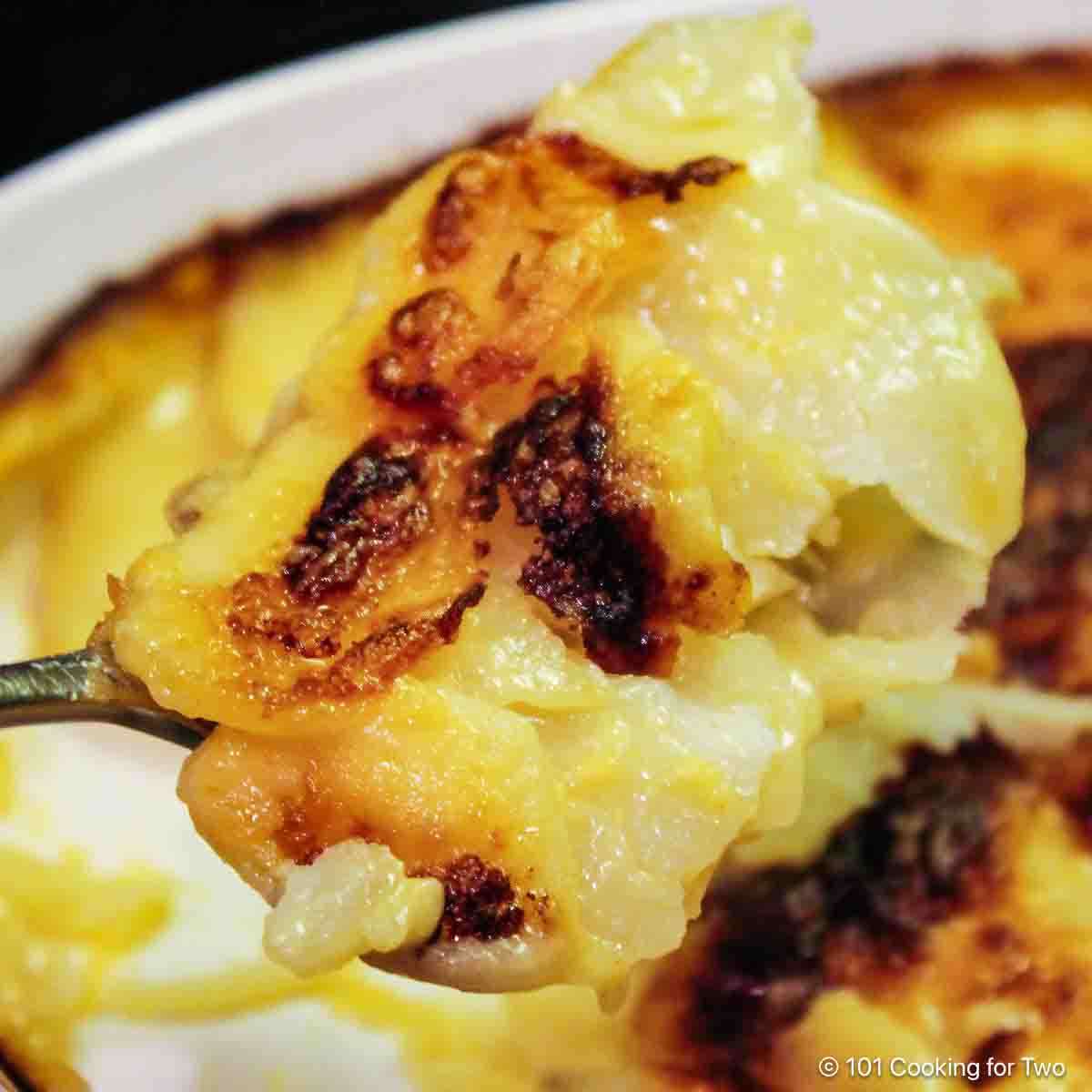
Old-fashioned scalloped potatoes with tender sliced potatoes in a creamy sauce and cheesy topping. An easy scalloped potato recipe—classic comfort food that Grandma made.
The standard recipe makes 4 generous servings, but it scales easily to 2 servings for two or 8 servings for a larger dinner.
Jump To (scroll for more)
- TL;DR — Recipe Summary
- 🥔 Ingredients
- 👨🍳 Quick Overview: How to Make Scalloped Potatoes
- ⏰ How Long to Cook Scalloped Potatoes
- ↕️ Scalloped Potatoes for Two, Four, or Eight
- 👨🍳 Variations and Options
- 🗓️ How to Make Scalloped Potatoes Ahead
- 🥔 Other Potato Recipes
- ❄️ Storage and Reheating Leftovers
- ❓ FAQs
- 📖The Recipe Card

Featured Comment by Kathy:
⭐⭐⭐⭐⭐
"Fantastic! The only change I made was to add some sliced onions between the first and second layers. Thank you for a great recipe. Perfect for an Easter dinner…"
TL;DR — Recipe Summary
What: Old-fashioned scalloped potatoes with thin-sliced potatoes, creamy sauce, and a cheesy topping.
Why: An easy, dependable side dish made with simple ingredients and a roux-based sauce.
How: Make a quick milk sauce, layer with the potatoes and cheese, then bake until tender.
🥔 Ingredients
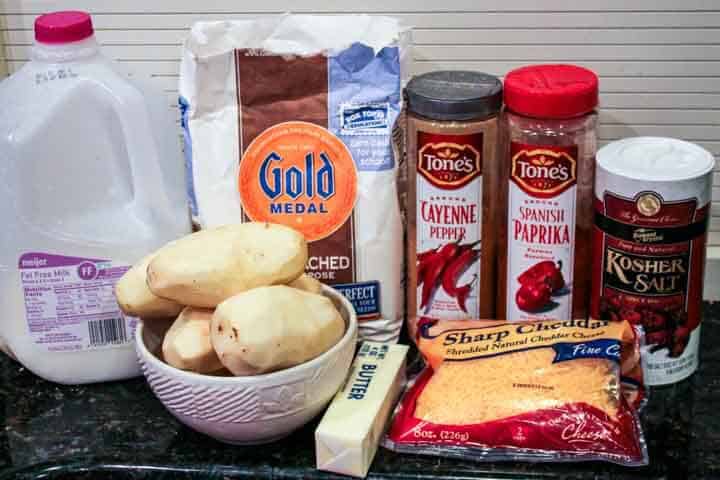
- Potatoes — Russet or Yukon Gold, peeled and thin-sliced (about ⅛ inch).
- Sauce ingredients — All-purpose flour, milk, butter, and salt.
- Cheese — Shredded cheddar is standard; Monterey Jack or Gruyere also work.
- Optional seasonings — Cayenne pepper and paprika.
👨🍳 Quick Overview: How to Make Scalloped Potatoes
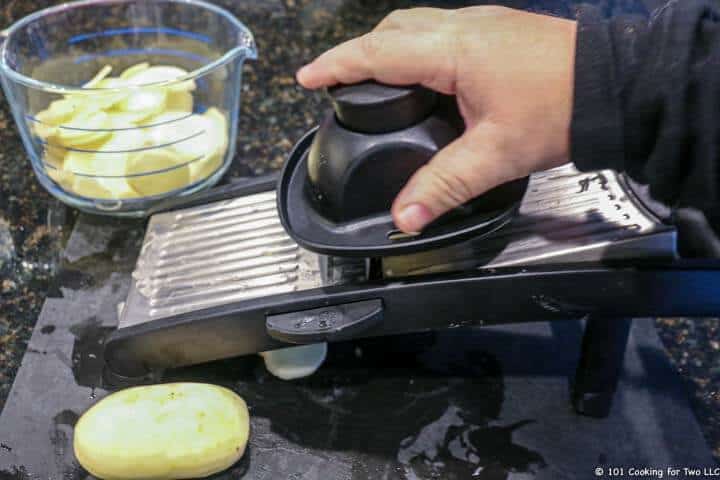
1. Prepare: Thin-slice the potatoes and soak in cold water. Drain and pat dry.
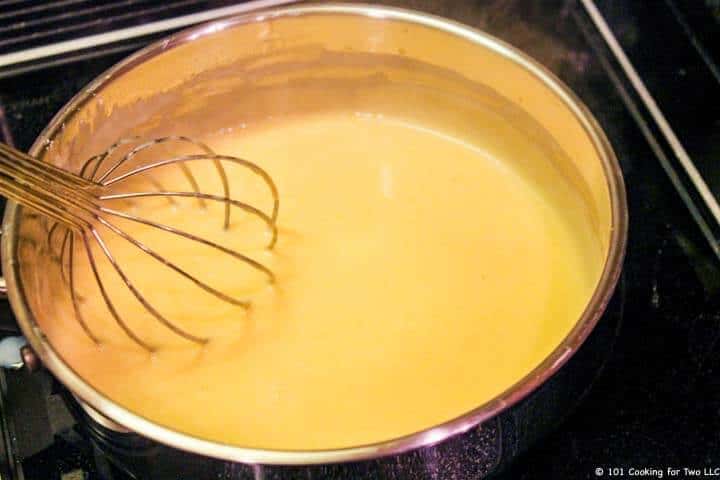
2. Make the sauce: Make a roux with butter and flour, add milk, then stir in the cheese.
3. Layer: Layer half the potatoes and sauce, repeat, and top with cheese.
4. Bake: Bake at 350°F until tender, about 60–80 minutes. Rest 5–10 minutes before serving.
For more details, keep reading. See the Recipe Card below for complete instructions and to print.
⏰ How Long to Cook Scalloped Potatoes
Bake scalloped potatoes at 350°F for 60–80 minutes, until fork-tender. For soft, creamy potatoes, cook to an internal temperature of 200°–210°F.
Pan depth, thicker potato slices, or add-ins may increase the cooking time. If the top browns too quickly, loosely cover with foil.
↕️ Scalloped Potatoes for Two, Four, or Eight
The standard recipe makes about 4 generous servings (6 cups) and uses a 6×9-inch (1½–2 quart) baking dish.
- For two: Make a half recipe for 2 servings (about 3 cups). This small batch fits a 4×6-inch or 5–6-inch round baking dish. Start checking for doneness at about 30–40 minutes.
- For four: Make the recipe as written for 4 servings.
- For eight: Double the recipe to 8 servings and use a 9×13-inch baking dish. Allow about 10–20 minutes of additional baking time.
Scaling the ingredients: Change the number of servings in the recipe card. Use the adjusted ingredient amounts; the written instructions do not automatically change.
Save this recipe!
👨🍳 Variations and Options
- Potatoes: Russet or Yukon Gold potatoes work best. Russets bake softer and creamier; Yukon Golds stay slightly firmer with a buttery texture. Almost any potatoes will work.
- Cheese: Cheddar is standard, but Monterey Jack or Gruyere also work. For classic scalloped potatoes without cheese, simply leave it out.
- Seasonings: Add garlic or onion if you like. Paprika or a little cayenne also works well.
- Add-Ins: Diced ham is the most common addition. Add it between the potato layers and allow 10–20 minutes of extra baking time if needed.
🗓️ How to Make Scalloped Potatoes Ahead
Assemble the casserole, but do not bake it. Cover and refrigerate for up to 2 days, then bake as directed. A cold casserole may need a little extra cooking time.
You can also freeze the unbaked casserole for up to 2 months. Thaw overnight in the refrigerator before baking.
🥔 Other Potato Recipes
- Scalloped Potatoes and Ham — a hearty, top-rated version built around diced ham.
- Crock Pot Scalloped Potatoes — same creamy texture with slow-cooker convenience.
- Cheesy Potatoes with Real Potatoes — classic funeral potatoes made the right way, no frozen hash browns.
❄️ Storage and Reheating Leftovers
Store leftovers refrigerated for 3–4 days or frozen for 3–4 months. Reheat in a 350°F oven until hot. The microwave also works but may soften the texture.
❓ FAQs
Scalloped potatoes are baked in a milk-based sauce, while au gratin potatoes include cheese. Since this recipe uses cheese, it overlaps both styles. Leave out the cheese for classic scalloped potatoes.
The most common causes are potato slices that are too thick, a casserole that is too deep, or not enough cooking time. Slice the potatoes about ⅛-inch thick and bake until fork-tender. For very soft, creamy potatoes, aim for an internal temperature of 200°–210°F.
📖The Recipe Card

Old-Fashioned Scalloped Potatoes
Ingredients
- 4-6 medium russet potatoes
- 3 tablespoons butter
- 3 tablespoons all-purpose flour
- 1½ cups milk
- 1 teaspoon salt
- ⅛ teaspoon cayenne pepper - optional
- 1½ cups shredded cheddar cheese - or cheese of choice
- 1 sprinkle paprika - optional
Step-by-Step Instructions
- Preheat the oven to 350°F, conventional (not convection).
Prepare the potatoes
- Slice 4–6 medium russet potatoes into slices about ⅛ inch thick. You should end up with approximately 4 cups of potato slices. Rinse in a bowl of cold water and leave them there while you make the sauce. When ready to assemble, drain well and pat dry with paper towels.
Make the roux based sauce
- In a saucepan over medium heat, melt 3 tablespoons of butter. Whisk in 3 tablespoons of flour and cook for a couple of minutes to make a roux. Slowly whisk in 1½ cups of milk. Whisk frequently for a few more minutes, then stir in 1 teaspoon of salt and ⅛ teaspoon of cayenne pepper (if using). Bring to a light simmer; the sauce will start to thicken.
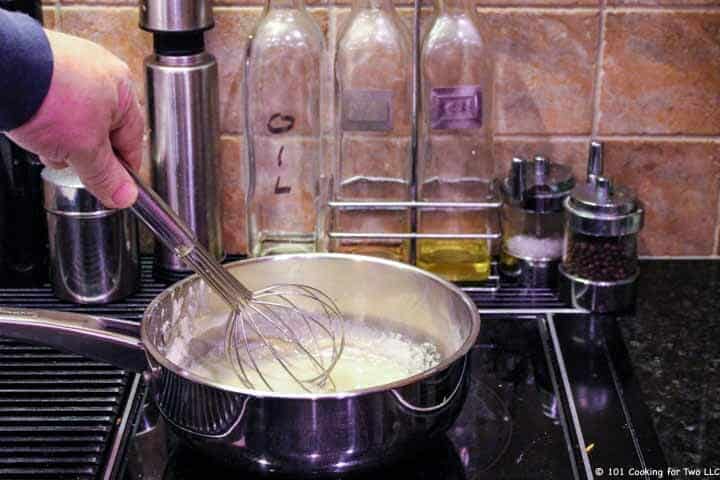
- Reduce the heat to low and add 1 cup of shredded cheese. Whisk until the cheese is fully melted and the sauce is smooth, then remove from the heat.
Assembly
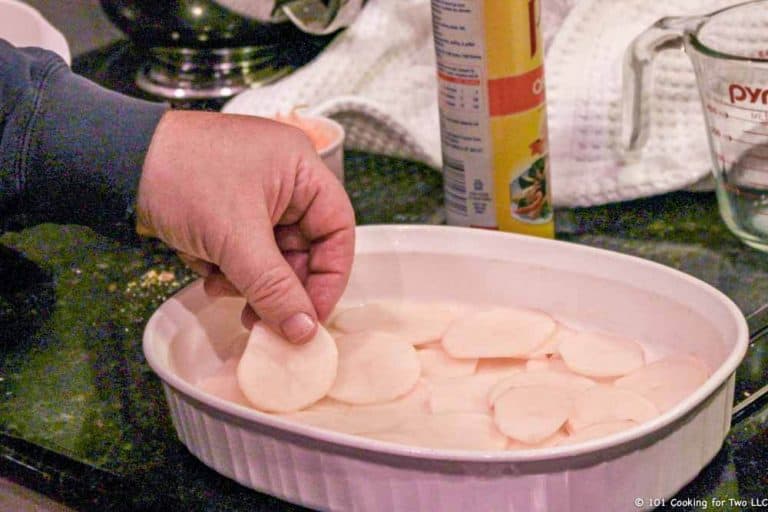
- Lightly coat a 6×9-inch (1½ to 2-quart) casserole dish with cooking spray. Layer half of the potato slices in the dish, spreading them out individually so they’re not stuck together.
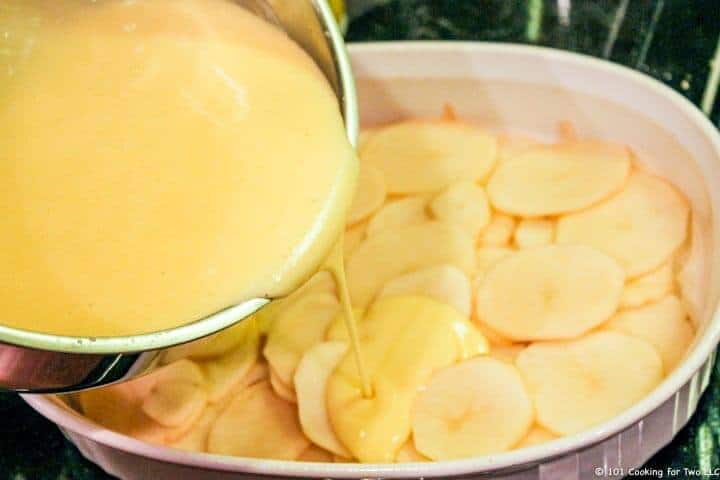
- Pour half of the cheese sauce evenly over the potatoes.
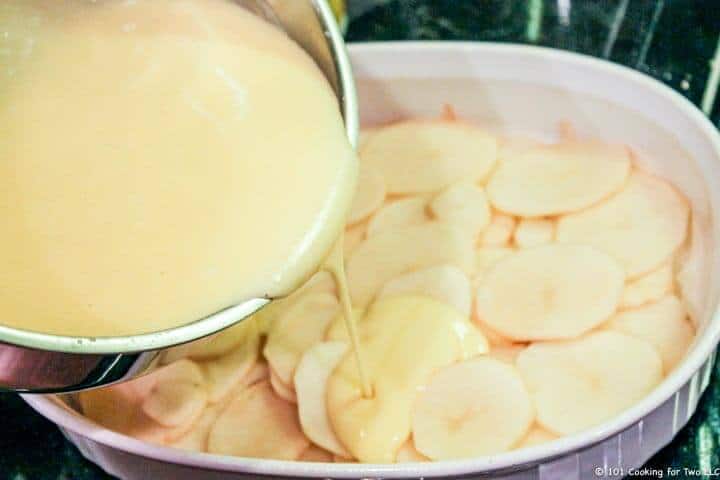
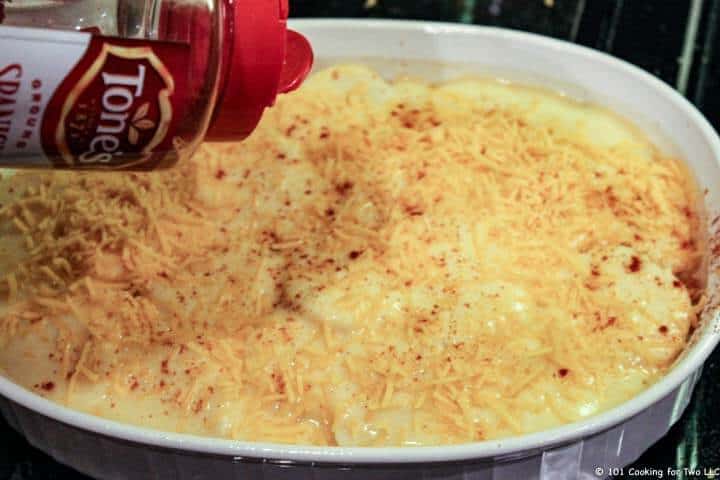
- Add the remaining potato slices in an even layer. Pour the remaining cheese sauce over the top, then sprinkle with the remaining ½ cup of shredded cheese. Finish with a light sprinkle of paprika, if desired.
Bake
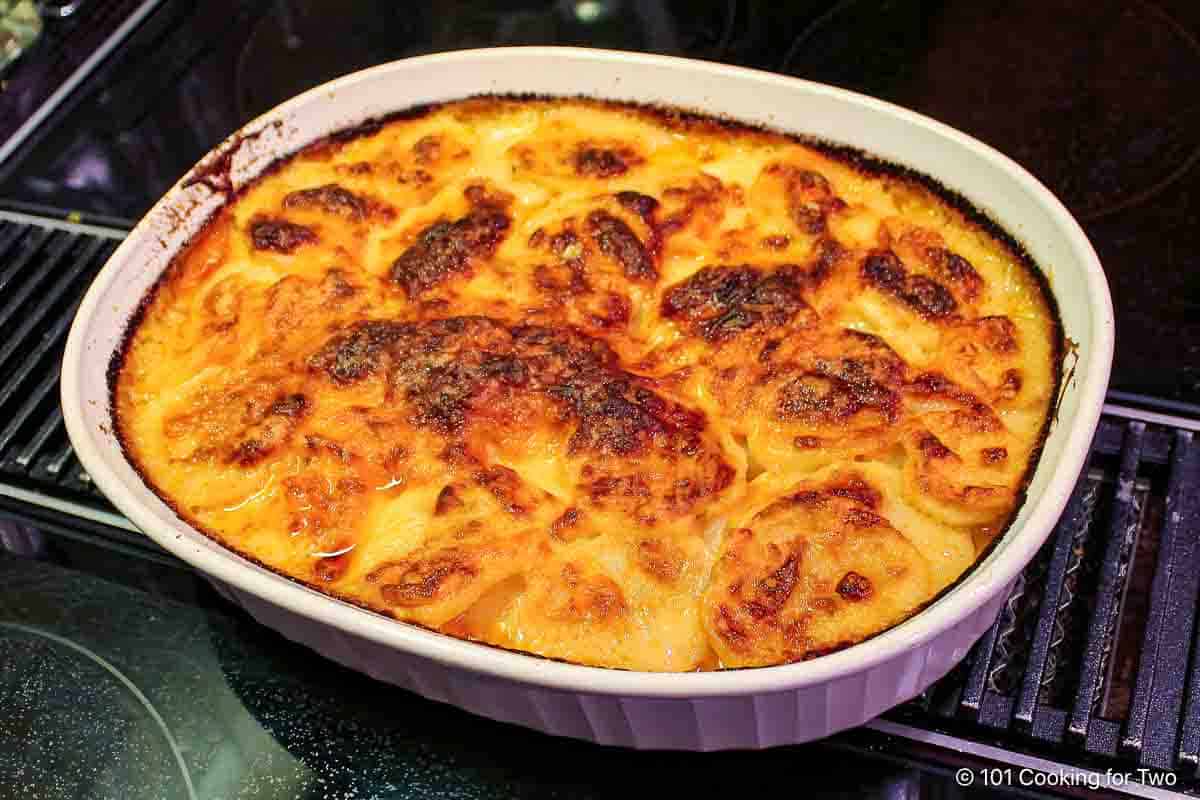
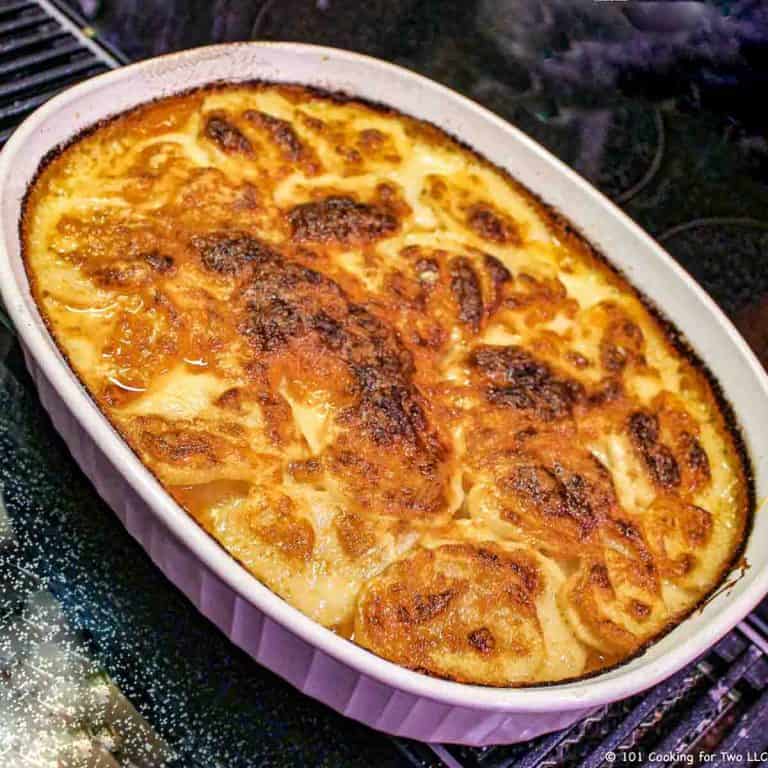
- Bake uncovered at 350°F for about 60 minutes, until fork-tender. For softer, creamier potatoes, cook up to 20 minutes longer. An internal temperature of 200°–210°F gives the creamiest texture. Rest for 5–10 minutes before serving.
Recipe Notes
Pro Tips
Russet potatoes are the classic choice and bake up very soft and creamy. Yukon Gold potatoes also work well and hold their shape a bit more. The recipe scales easily to 2, 4, or 8 servings. See the post for pan sizes and adjusted baking times. For a creamier, almost “melt-in-your-mouth” texture, we like to cook the potatoes about 20 minutes longer than just fork-tender and tent with foil near the end if the top is browning too much. Cook to your preferred texture, but aim for at least fork-tender. Let the casserole rest for 5–10 minutes before serving. This helps the sauce thicken slightly and makes serving easier. Store leftovers refrigerated for up to 4 days or frozen for up to 4 months. Reheat in the oven rather than the microwave to preserve the texture. If you use a mandoline, be careful and follow the manufacturer’s instructions. They are very good at slicing potatoes—and fingers.Your Own Private Notes
To adjust the recipe size:
You can adjust the number of servings above; however, only the amount in the ingredient list is adjusted, not the instructions.
Nutrition Estimate (may vary)
This is a classic, older recipe that is easy and delicious, made with simple ingredients, based on a recipe from the 1971 Florence Junior League Cookbook (not online).
Editor's Note: Originally Published January 19, 2013. Updated over the years with expanded options, refreshed photos, and a table of contents to help with navigation.


Pat says
If this is 101 Cooking for two, why is this recipe for 8?
DrDan says
Hi Pat,
Welcome to the blog. All recipes are adjustable in the recipe card by changing the number of servings. Basically, this blog is not two servings but smaller households frequently with leftovers. For a more complete discussion see https://www.101cookingfortwo.com/recipes-not-two-servings/
Dan
Kathy shum says
I only have a convetion microwave. Directions say no convection. Does this include a roast convection. Or will a toaster oven work.
DrDan says
Hi Kathy,
Welcome to the blog.
I haven't used a convection/microwave but do understand the concept. When used as a convection oven, it should work well. There should be a convection bake and a convection roast. Use the bake option since the roast option should turn on the broiler element.
I would go for 325 and about the same timing. Remember you are going for "fork tender" so poke it to see if it is done. The internal temperature should probably be in the 200-205 range.
I'm not a fan of toaster ovens for real cooking. They are totally inaccurate.
All the above is my best "guess" since I have never done this.
Dan
Pauletta Kodama says
I know that households have a cheese grater, but I also know that they are usually very old and don’t actually work. I’ve even seen a couple of rusty ones, but my friends would kill me if I ever said anything more about it.
Lisa says
Hi, this recipe looks awesome. I am considering trying it for Easter dinner on Sunday. Do you think that there is any reason why Gruyere cheese could not be substituted? I don't see why not but thought I would ask.
DrDan says
Pick the cheese you want. It should be fine.
Rod says
Awesome! Dish came out just as everyone reviewed about it. I didn't deviate from the recipe at all. Thanks for the tips and will absolutely make it again. I
DrDan says
Hi Rod,
We do love this dish. We now tend to cook it longer to make the potatoes more tender.
Thanks for the note.
Dan
Joe says
I made this last night and it was amazing. Super easy. Never realized one of my favorite side dishes could be so easy to make from scratch.
DrDan says
Hi Joe,
Thanks for the note, I just published a crockpot version of this a couple of days ago. See the home page.
Dan
Stephanie Tidd says
I made these last and they were a big hit with me and my partner.
I'm trying your crock pot chiken stew today.
The potatoes are definitely five star worthy.
Hopefully the stew will turn out good too.
Stephanie Tidd
DrDan says
Hi Stephanie,
I do like these potatoes. They are just so "old fashion" in how they are made and taste.
About the chicken stew. It is bland. Now chicken stew is bland by its nature. Read the comments for some suggestions of you think it is too bland on a taste test.
Dan
Camille says
I wish this recipe was pared down for 2 people.
DrDan says
Can definitely be cut in halve but it is too much work to only make two servings.
DrDan
Lorna Smith says
on the beginning page your list of items for scalloped potatoes It has listed 1 cup of milk on the next page fill recipe it says to add 1 1/2 cups of milk, which is it, Cant wait to try these so, since my potatoes are cut can someone get back to me Thanks
DrDan says
It is 1 1/2 cups of milk. I'm not seeing where it says 1 cup. If you mean the cheese 1 cup goes in the sauce and 1/2 cup on top.
DrDan
Nancy Baker says
This is an awesome recipe. Grabbed it last minute off the site and did not realize until I had peeled 6 potatoes that it makes 8 servings!! But it was too late to change course so I went ahead and it is really good!! I did add sliced onions and broccoli florets so I made it basically into a meal. Will see how it freezes!! (FYI, I added the onions with the butter and allowed them to sweat a bit before adding the flour and then added the broccoli with the potatoes, very good).
kathleen williams says
would you please explain 3 t butter is it teaspoon, or tablespoon what flour plain or cornflower
Regards
Kathleen
DrDan says
The abbreviations "t" and "T" are the old fashion way for T=Tablespoons and t=teaspoons. I have it covered in FAQ's and current post spell it out but about 300 of the recipes here use those abbreviations. "Flour" means all-purpose flour and not corn flour.
DrDan
DrDan says
Thanks Bill.
DrDan
bill says
all your recipes make me hungry! Im so glad I found you!!!
Judy U. says
ok, I tried making this today and had a hard time with the sauce not getting all thick and clumpy. What am I doing wrong? There seemed like not enough sauce.
DrDan says
You probably did not get the butter and flour combined well. This is called a roux and here it a video that might help.
https://www.youtube.com/watch?v=IiKODa0hnsY
Once you get the roux, add the milk but I do that slowly over heat and slowly.
Let me know if this doesn't help
DrDan
Dr Dan says
We have done this 3 times in 2 weeks. We have to stop or buy new clothes.
Chris says
My kids are not really mine because they don't like this dish. It was one of my all time favorites that my mother made. I like this version.