
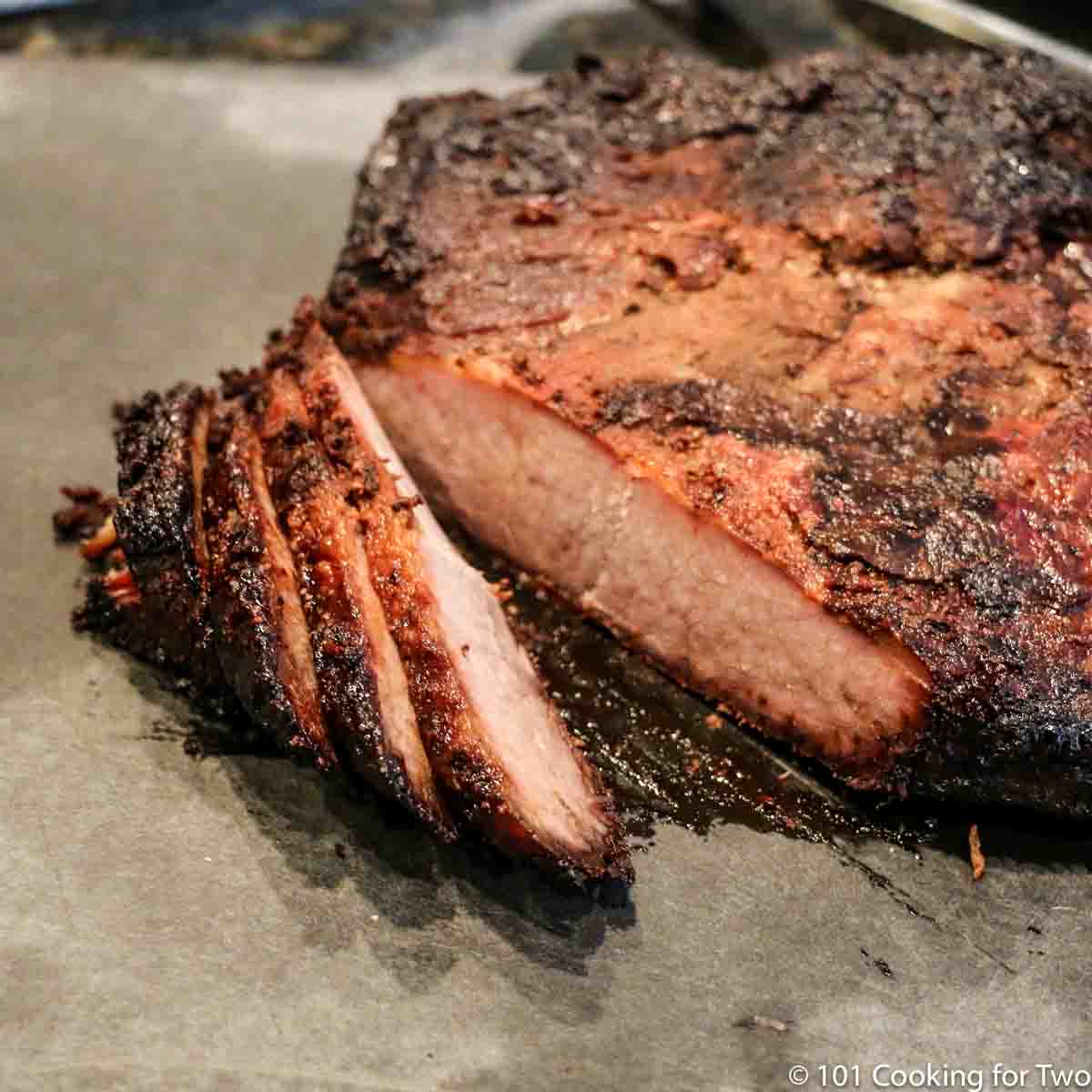
Cooking beef brisket on a grill is easier than most people think. With indirect heat, a good BBQ dry rub, and optional wood smoke, you can make tender low-and-slow brisket with great bark without a dedicated smoker.
This beginner-friendly guide walks you through gas grill setup, timing, and temperature tips for tender brisket with great bark.
⏰ Quick Answer: How Long to Cook Brisket on a Gas Grill
Cook beef brisket at 225°–250°F with indirect heat on a gas grill.
- Brisket takes about 1 to 1½ hours per pound, depending on thickness and weight.
- A 5-pound brisket usually takes about 5–6 hours.
- Brisket is done at 200°–205°F internal temperature—not by time alone.
Jump To (scroll for more)
- 🐄 TL;DR — Recipe Summary
- 🐄 Ingredients
- 👨🍳 Quick Overview: How to Cook Brisket on a Gas Grill
- ⏰ How Long Does Brisket Take on a Gas Grill?
- 🌡️ What Temperature is Brisket Done?
- 🔥 What Temperature to Grill Beef Brisket
- 📚Reference posts for more information
- 🐄 What Brisket to Buy (Flat vs Point Cuts)
- ❄️ Storage and Reheating Leftovers
- 🌡️ What is “The Stall”?
- 📦 The Texas Crutch
- ❓ FAQs
- 📖The Recipe Card

Featured Comment from Matt:
⭐⭐⭐⭐⭐
"Thanks, this technique and explanation is fantastic! Haven't done it for a few years and these instructions are great."
🐄 TL;DR — Recipe Summary
What it is: A beginner-friendly way to cook tender beef brisket on a gas grill with indirect heat and wood smoke.
Why you’ll love it: Real low-and-slow BBQ flavor and bark without needing a smoker or complicated setup.
How to make it: Season the brisket with dry rub, cook at 225°–250°F with indirect heat and optional real wood smoke, then rest well before slicing.
🐄 Ingredients
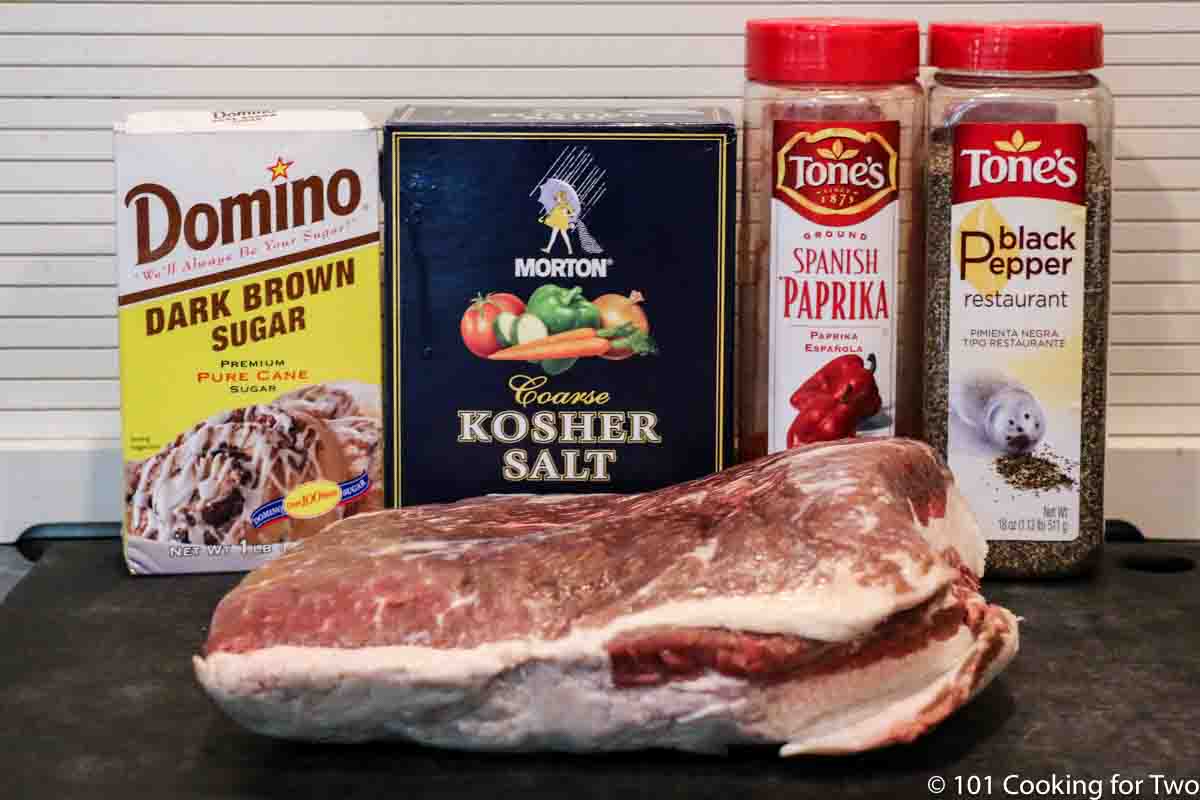
- Beef brisket – use the size that fits your needs. I usually cook a 4–5 pound point or flat cut, which fits well on a gas grill.
- Dry rub – a simple mix of brown sugar, paprika, kosher salt, and black pepper. Or use your favorite brisket rub.
- Wood chips (optional but recommended) – hickory, mesquite, apple, or cherry add smoke flavor on a gas grill.
👨🍳 Quick Overview: How to Cook Brisket on a Gas Grill
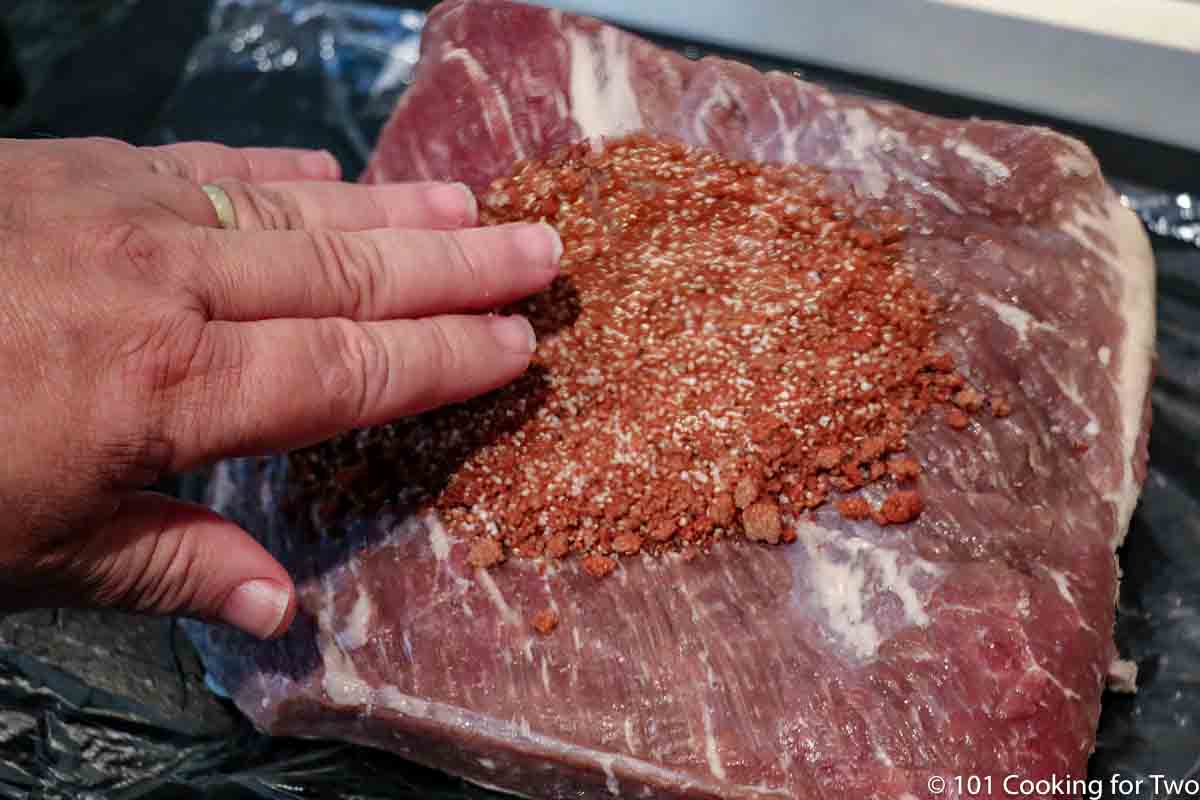
1. Season: trim some fat if you wish, then coat all sides generously with dry rub.
2. Set up the grill: steady 225°–250°F with indirect heat, a drip pan underneath, and a way to generate smoke.
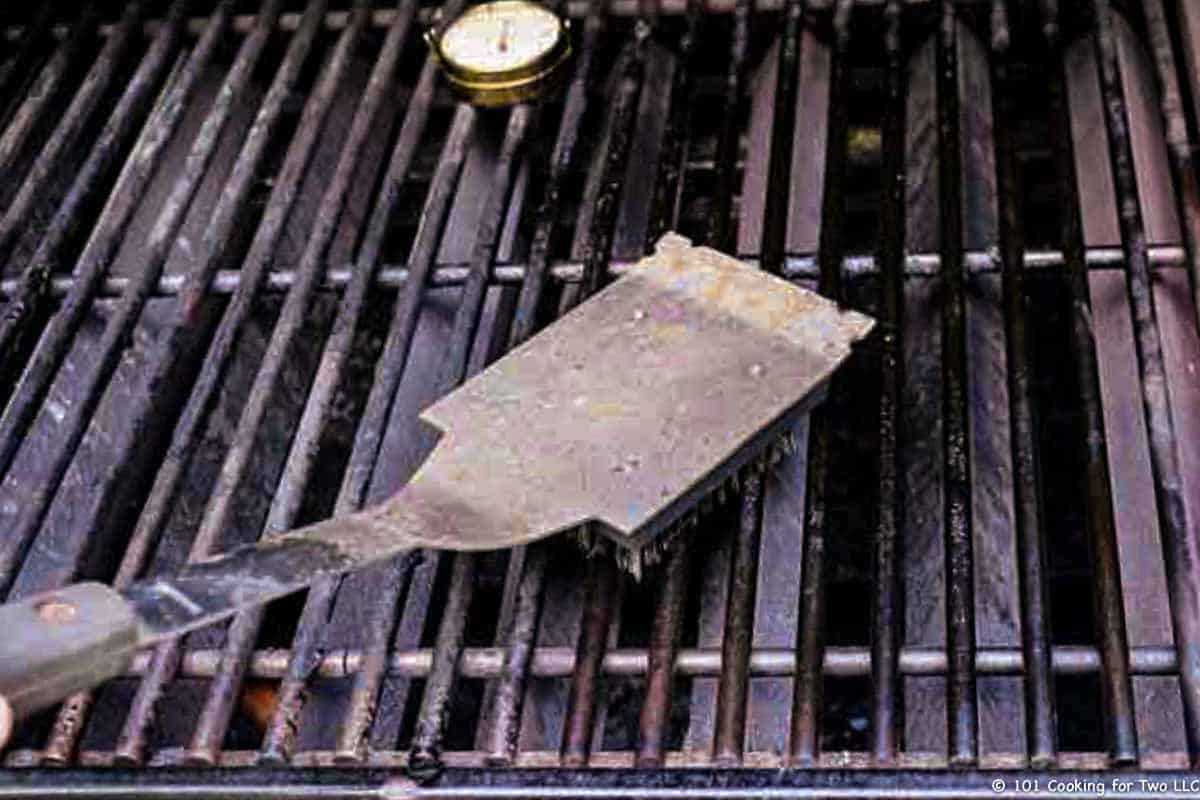
✅ Pro Tip: Opening the hood can drop the heat and take up to 30 minutes to recover. Use a remote thermometer to monitor grill temps (225°–275°F).
3. Cook: place the brisket on the indirect side over the drip pan.
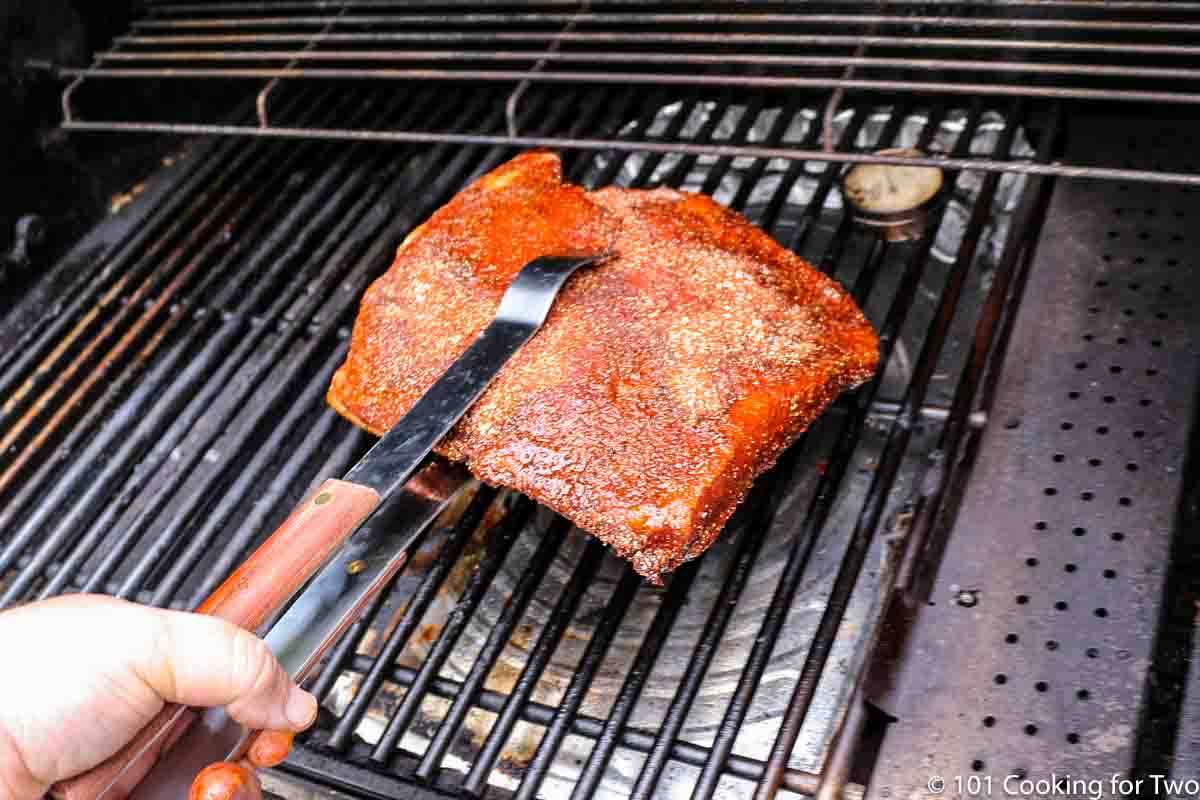
✅ Pro Tip: Keep a backup propane tank handy for this long cook. Always go by final temperature (200°–205°F), never just by time.
4. Add smoke: if using wood chips, replenish as needed. Cook until the internal temp reaches 200°–205°F — about 5–6 hours for a 5-pound brisket.
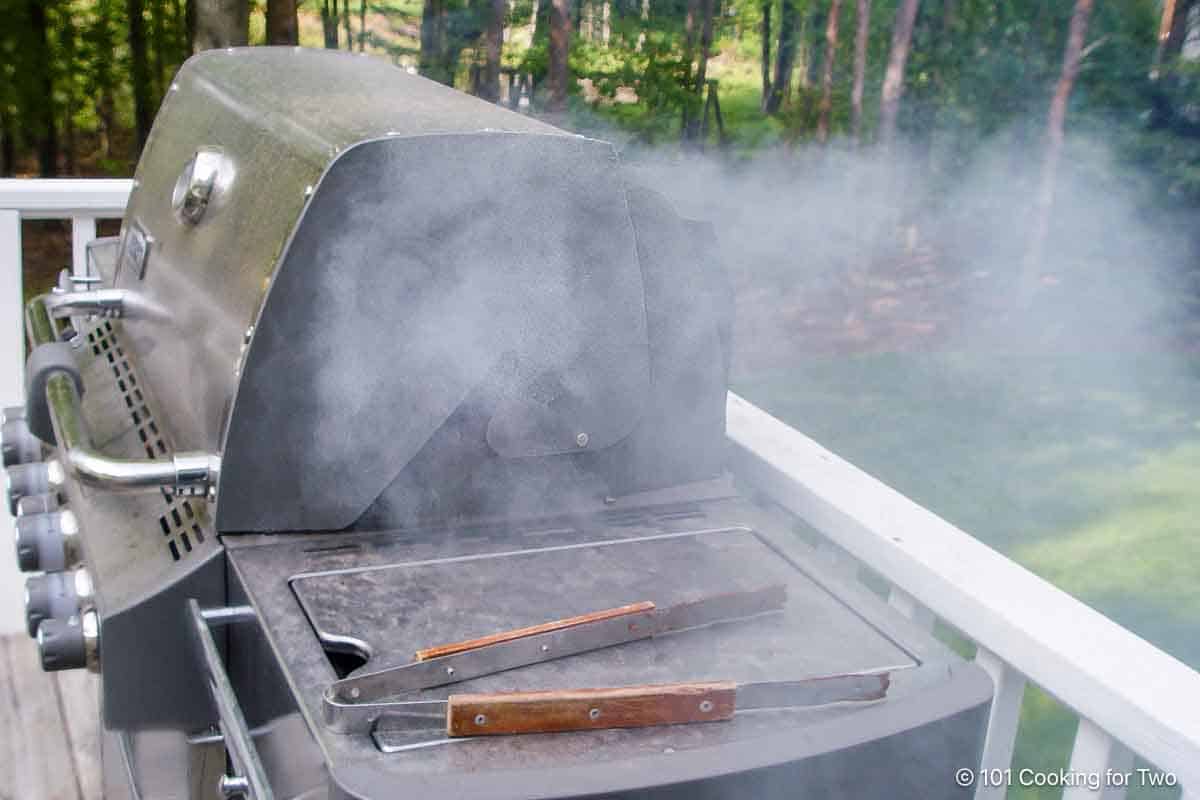
✅ Pro Tip: Wood smoke is optional but highly recommended. I like 1–2 hours with hickory, mesquite, or fruit woods.
5. Rest: remove, wrap in foil and towels, and rest 1–2 hours.
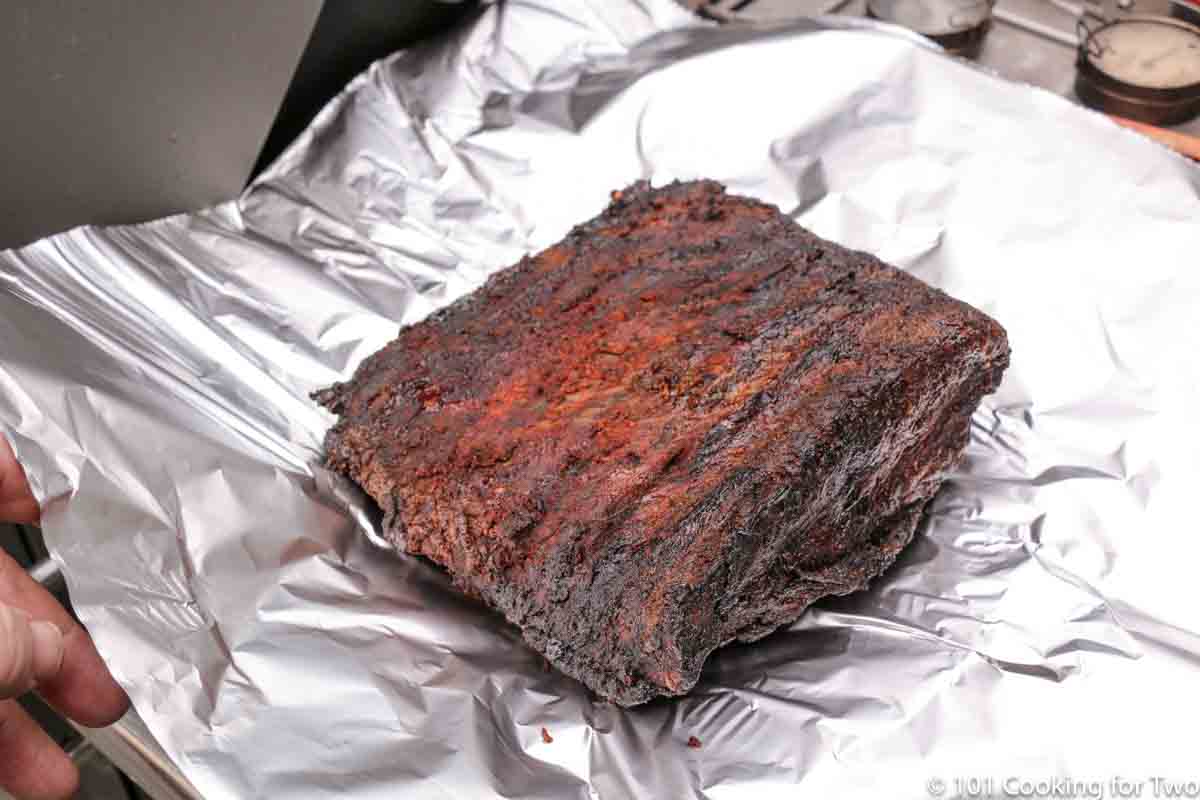
✅ Pro Tip: Don’t skip the rest. Even 20 minutes helps, but 1–2 hours is best. Well-wrapped brisket can rest up to 4 hours to fit your timing.
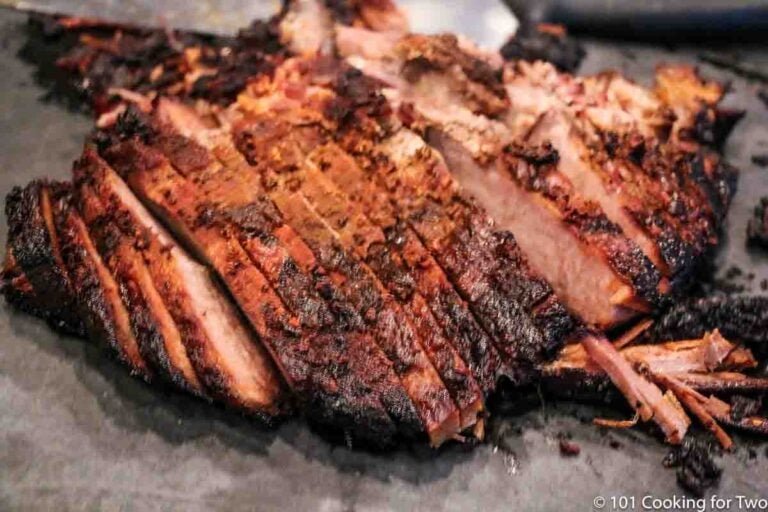
6. Slice or chop to serve: cut thin across the grain for slices, or chop for sandwiches.
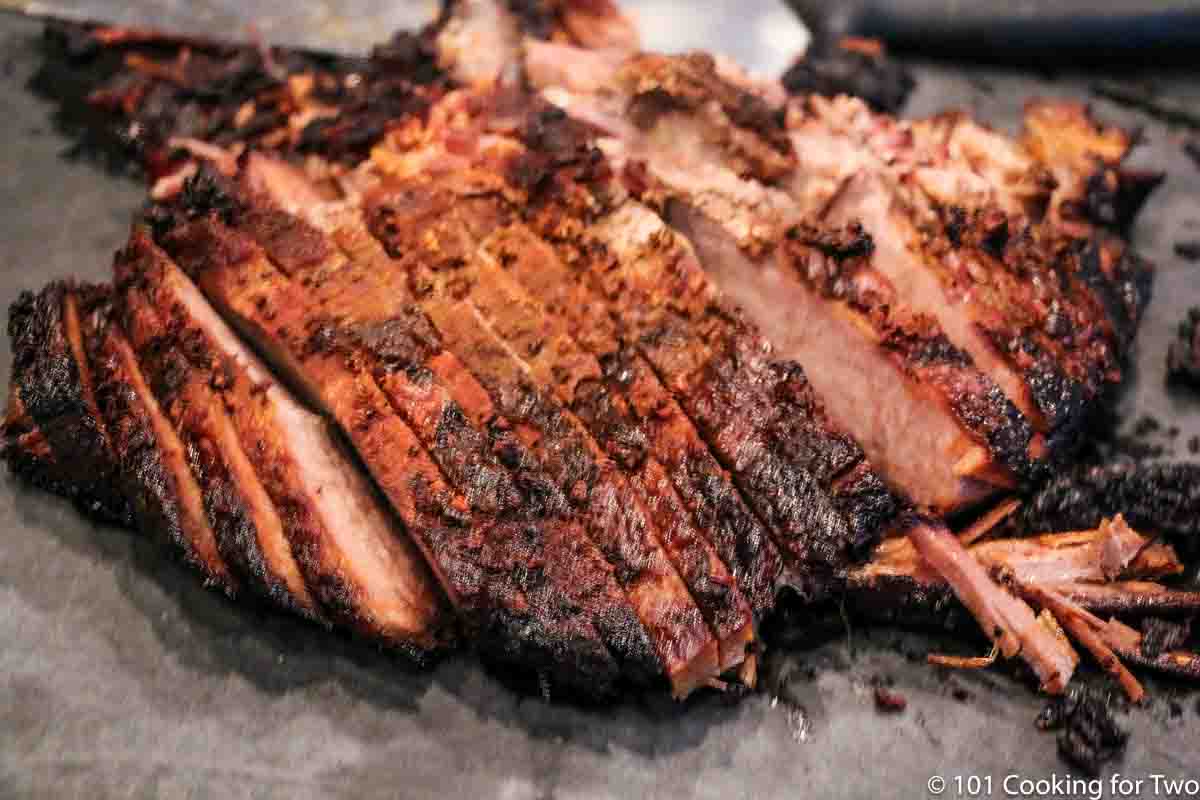
For more details, keep reading. See the Recipe Card below for complete instructions and to print.
⏰ How Long Does Brisket Take on a Gas Grill?
Brisket takes about 1 to 1½ hours per pound at 225°–250°F. A 5-pound brisket normally needs 5–6 hours on a gas grill. But the stall at 150°–160°F can add extra time, so treat the estimate as a guide—not a promise.
✅ So plan your day accordingly — cook until the internal temp hits 200°–205°F, even if it takes longer than the estimate.
🌡️ What Temperature is Brisket Done?
Brisket is done when the internal temperature reaches 200°–205°F. Below 195°F, it won’t shred or slice as tenderly. Around 203°F is the sweet spot many competition smokers target. 205°–210°F is still acceptable, but beyond 210°F the brisket will start to dry out and lose texture.
🔥 What Temperature to Grill Beef Brisket
Low-and-slow indirect cooking at 225°–250°F gives brisket time to break down connective tissue, become tender, and build bark.
✅ Final internal temperature matters more than cooking time estimates. Brisket is only done when it reaches an internal temperature of 200°–205°F.
Grilling tips for beef brisket
- Use the grill you have. Gas, charcoal, pellet — any grill works as long as you can keep a steady 225°–250°F and enough space for indirect heat.
- Keep the lid closed. Every time you open it, the heat drops and can take up to 30 minutes to recover. Use a remote thermometer so you don’t have to peek.
- Stay in range. Above 275°F brisket can dry out; below 225°F it may never get tender. Aim for steady heat, not perfection.
- Fuel matters. Brisket cooks take hours. Have a backup propane tank or extra charcoal so you don't run out halfway through.
✅ Pro Tip: HELP — I’m out of gas. All is not lost: move the brisket onto a rimmed baking sheet (with a rack if you have one) and finish in the oven at 250°F until it reaches the final temperature.
You must have a reliable grill surface thermometer to do this correctly, and a continuous-read probe meat thermometer for the brisket itself is very useful.
🛒 Recommended Thermometers
Here are some suggestions to help you succeed, but you can find many more good products at your local stores. All links below are affiliate links, meaning I make a small profit from your purchases. This commission does not affect your price. We participate in the Amazon Services LLC Associates Program. As an Amazon associate, I earn from qualifying purchases.
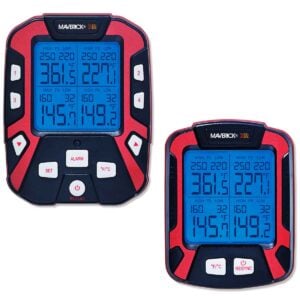
Maverick XR-50 4 Probe Remote Thermometer
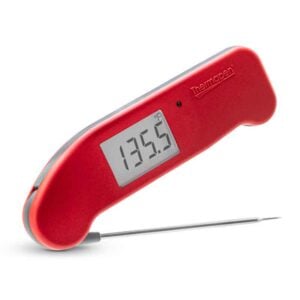
Thermapen™ One from Thermoworks™
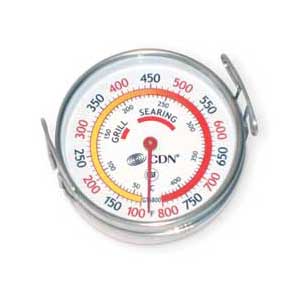
CDN Grill Surface Thermometer
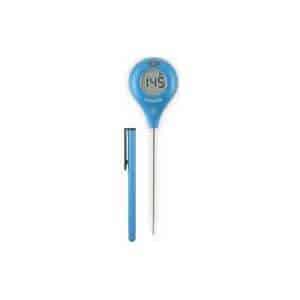
Thermopop™ by Thermoworks™
Save this recipe!
📚Reference posts for more information
- How To Set Up Your Gas Grill for Smoking and Low and Slow Cooking
- A Beginner's Guide to Grill Temperature on a Gas Grill
- BBQ Dry Rub – for a more complicated flavor profile
- Memphis Dry Rub Recipe
- Memphis BBQ Sauce Recipe
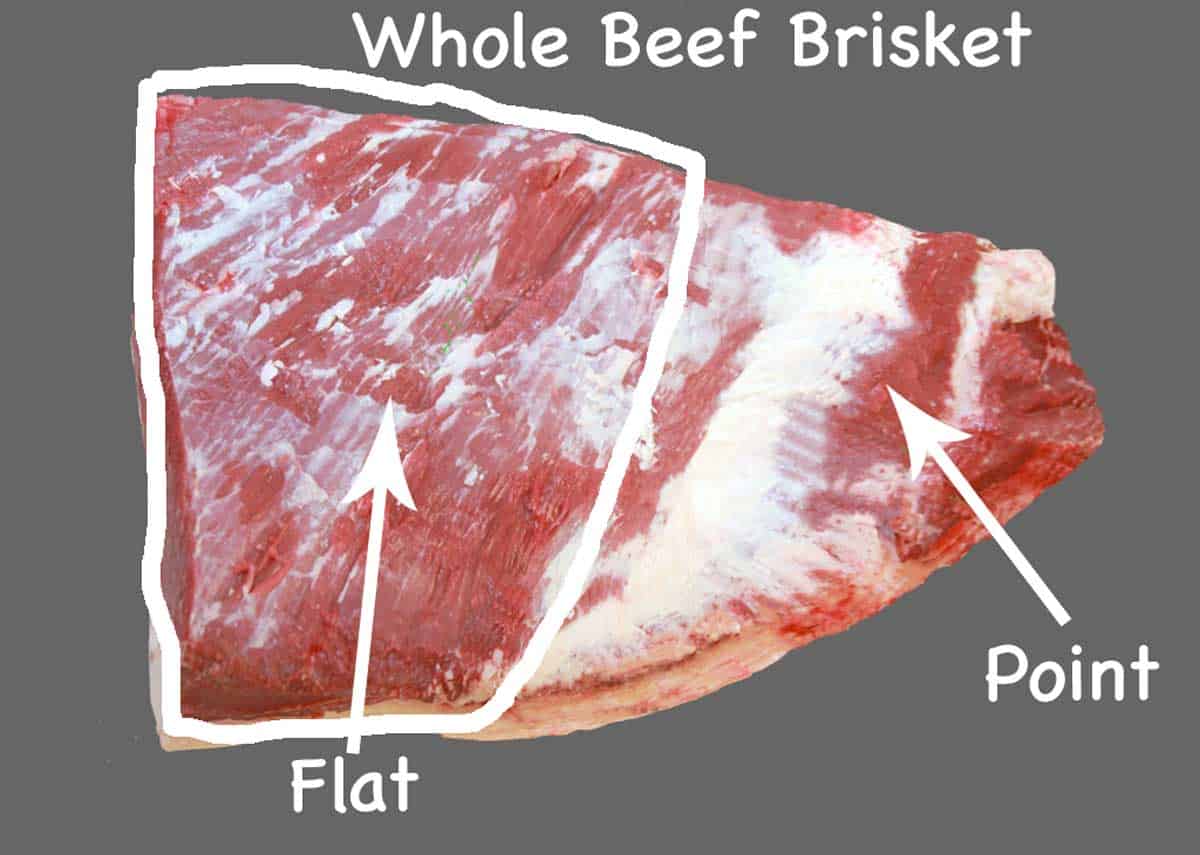
🐄 What Brisket to Buy (Flat vs Point Cuts)
Brisket is sold either as a whole packer brisket (8–12 pounds) or cut in half into the flat and the point. Unless you’re feeding a crowd, most home cooks will want one of the halves.
- Flat cut (4–6 pounds): leaner, slices neatly, and the cut you’ll most often find in grocery stores.
- Point cut (4–5 pounds): more fat and marbling, juicier, and develops an excellent bark.
- Whole packer (8–12 pounds): great for parties, but usually too big for a standard gas grill.
👉 For two or small families, choose a flat or point in the 4–5 pound range — it fits most gas grills and will cook in about 5–6 hours at 225°–250°F.
❄️ Storage and Reheating Leftovers
- Refrigerate: Store leftovers in an airtight container for up to 4 days.
- Freeze: Brisket freezes well for up to 3 months.
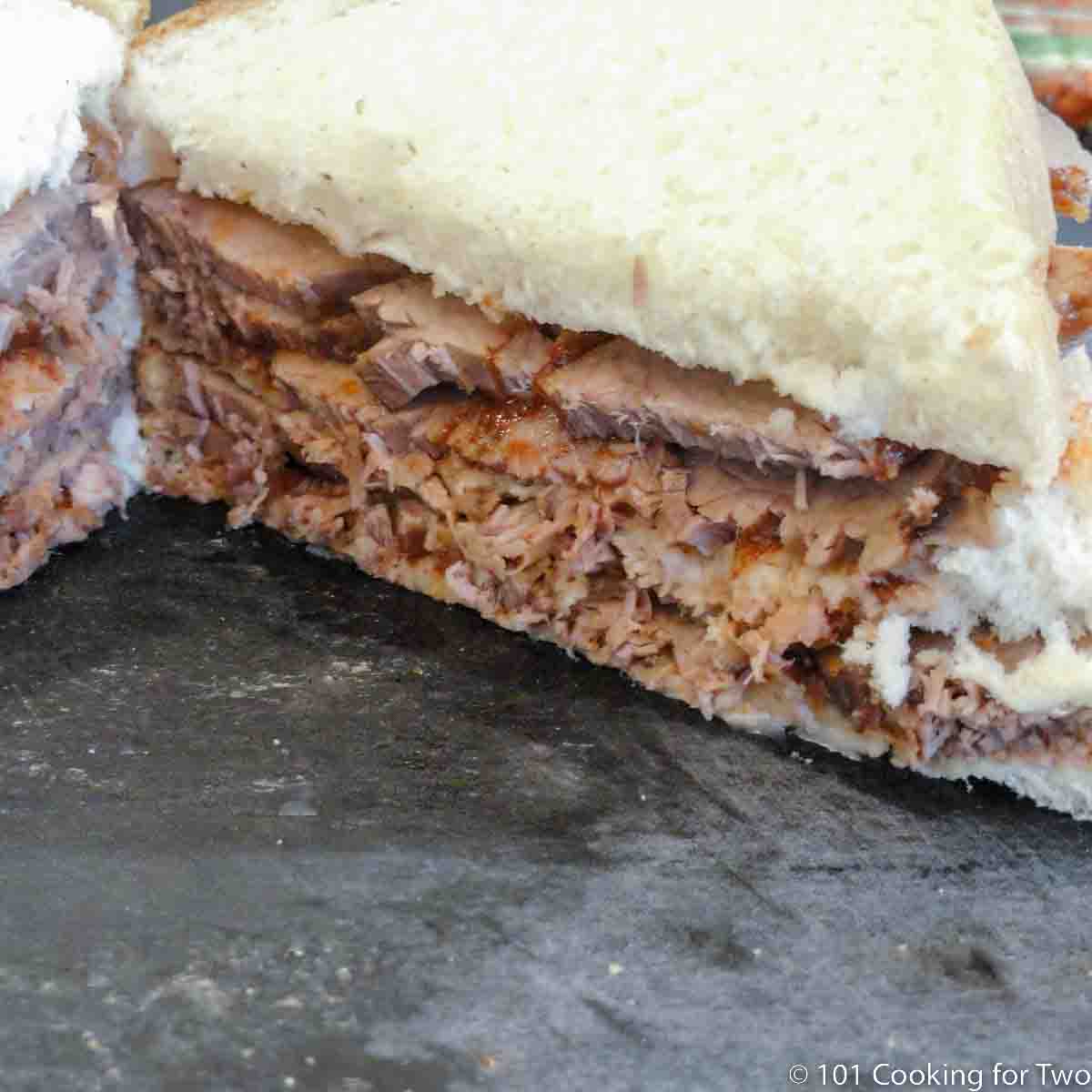
Reheating: Cover and warm in a 300°F oven until hot. Unlike pulled pork, brisket can handle a splash of BBQ sauce during reheating — the acidity won’t hurt the texture. Add sauce if you like, or reheat plain.
Easiest Oven Baked BBQ Beef Brisket
Learn how simple it is to make smoky and tender oven-baked BBQ Beef Brisket with this never-fake brisket recipe—just two ingredients and 5 minutes of prep time—everybody deserves great BBQ.
🌡️ What is “The Stall”?
“The Stall” happens when brisket (or pork butt) reaches about 150°–160°F. At this point, the meat fibers contract, squeezing water out of the cells. That moisture evaporates from the surface, cooling the meat and slowing (staling) the cooking.
For most meats, this wouldn’t matter — steaks and pork chops are done long before 200°F. But with brisket (and pork butt), it matters because they need to reach 200°+ to become tender.
The stall may last for hours, depending on the size of the cut and other factors — sometimes as long as 6 hours for a large whole brisket.
The stall can be minimized with a classic smoker technique known as “The Texas Crutch.”
📦 The Texas Crutch
The “Texas Crutch” is a classic smoker’s trick to push through the stall. It means tightly wrapping the brisket (usually in butcher paper, though heavy-duty foil is more common at home) to trap moisture and stop evaporation. Around 90% of competition smokers use it — but remember, they’re usually cooking very large whole briskets.
By wrapping, you create a mini-environment with 100% relative humidity next to the meat. The fibers will still contract and release water, but without evaporation, the brisket won’t cool itself down — so the cooking continues instead of stalling.
✅ Pros of the Texas Crutch
- Time: You can save hours, especially with larger cuts.
- Moisture: Some juice re-absorbs as the beef passes 180°F, making the meat a little moister (though the effect is modest).
- Smoke control: On a smoker, wrapping limits smoke exposure if you don’t want it too strong.
⚠️ Cons of the Texas Crutch
- Bark damage: Steam softens your hard-earned crunchy bark. You can counter this a bit, but not completely.
- Extra fuss: Wrapping takes work, and many people find it more trouble than it’s worth.
- Heat loss: Opening the grill to wrap drops the temperature, and it takes effort to get it steady again.
📝 The Texas Crutch: Technique and My Take
- Choose your wrap: Butcher paper (the pink kind, not wax-coated) is best for bark, though most people use heavy-duty foil since it’s always on hand.
- When to wrap: Start in the 150°–160°F range, once the bark is dark red to black and “set up,” not mushy.
- Prep the wrap: Get two large sheets ready so you can double-wrap quickly.
- Handle the grill lid: Open only as far as needed and close immediately — every second open costs heat.
- Wrap tight: Really tight. Crimp the seams and ends to leave as little space as possible.
- Probe access: Crimp snugly around your remote, continuous-read thermometer — it’s required to do this right.
- Finish the cook: Return to the grill until the brisket reaches 200°–205°F.
- Optional bark boost: If you want a firmer bark, unwrap around 195°–200°F and then finish cooking to 205°F.
Why I don’t usually do this
- I rarely bother with the Texas Crutch. I’m usually cooking smaller brisket cuts, so the stall isn’t as long.
- I also love a good crunchy bark, which wrapping tends to soften.
- The so-called “moisture boost” isn’t huge — much of what people think of as moisture is really melted collagen, which happens naturally between 160° and 180°F.
❓ FAQs
Plan on about ½ pound per person. For teenage boys, aim for a figure closer to 1–1½ pounds – and always plan for leftovers.
It doesn’t really matter. The moisture comes from melted connective tissue, not the fat cap. Most competition smokers agree it makes no difference.
Some pitmasters leave it on, arguing it protects the meat. Others say it makes a greasy mess and that collagen provides most of the moisture anyway.
A compromise is to trim the fat cap to about ¼ inch thick. That’s what I usually do – I want tender brisket with bark, not a chunk of fat on my plate.
I usually skip both. A good brisket already has plenty of beef flavor and connective tissue for tenderness. Injecting may add flavor, while brining can slightly change texture, but most backyard cooks won’t notice a major difference.
Yes. A gas grill works very well for brisket if you can maintain indirect heat around 225°–250°F. Optional wood smoke adds traditional BBQ flavor and helps create bark without needing a dedicated smoker. Other grills also work if you can maintain steady low-and-slow temperatures.
📖The Recipe Card
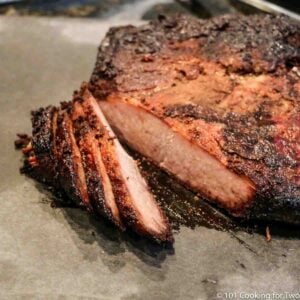
Brisket on a Gas Grill (Low and Slow BBQ)
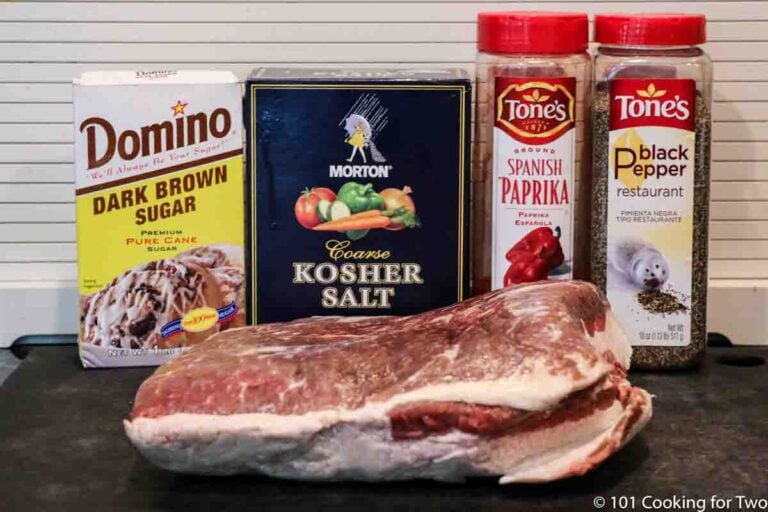
Ingredients
- 5 pound beef brisket - (or size of your choice)
- wood chips (ickory, mesquite, or fruit woods suggested)
- ¼ cup brown sugar
- ¼ cup paprika
- 2 tablespoons kosher salt
- 2 tablespoons black pepper
Step-by-Step Instructions
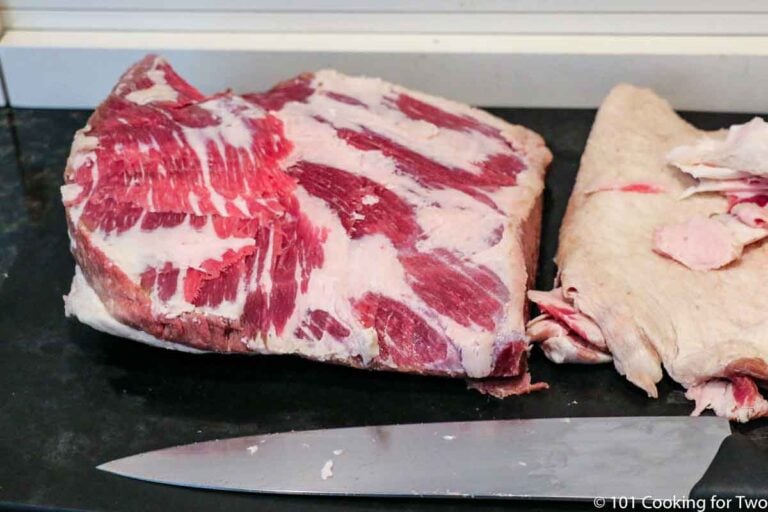
- Use a half or whole brisket and rub of your choice.

- (Optional) Trim large chunks of fat and the fat cap. Some leave it untrimmed or at ¼ inch thick — it’s a personal choice.
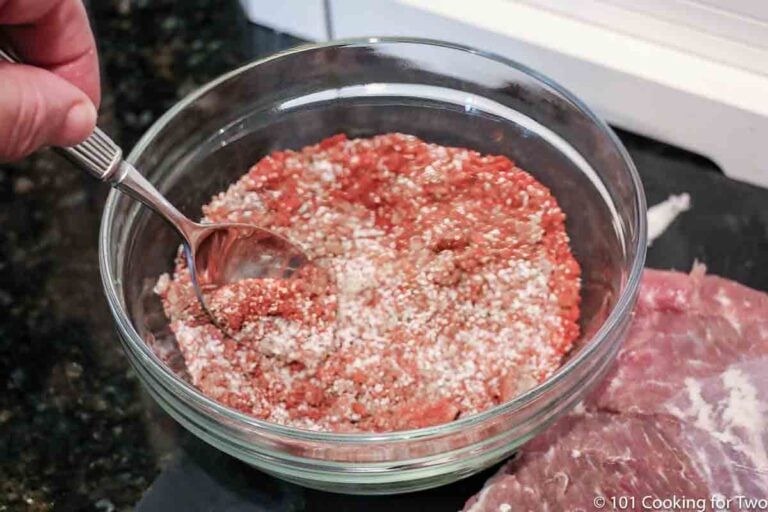
- Use the rub of your choice, or you may use mine. For my rub, mix ¼ cup each of brown sugar and paprika. Add 2 tablespoons each of kosher salt and black pepper and mix well.
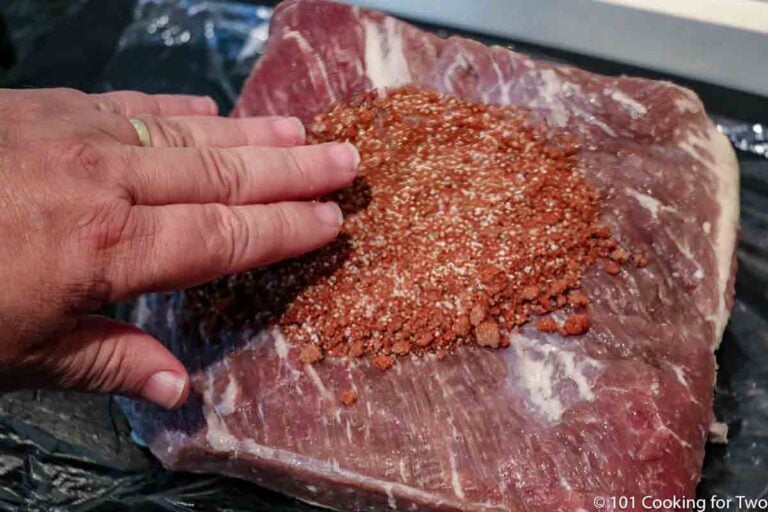
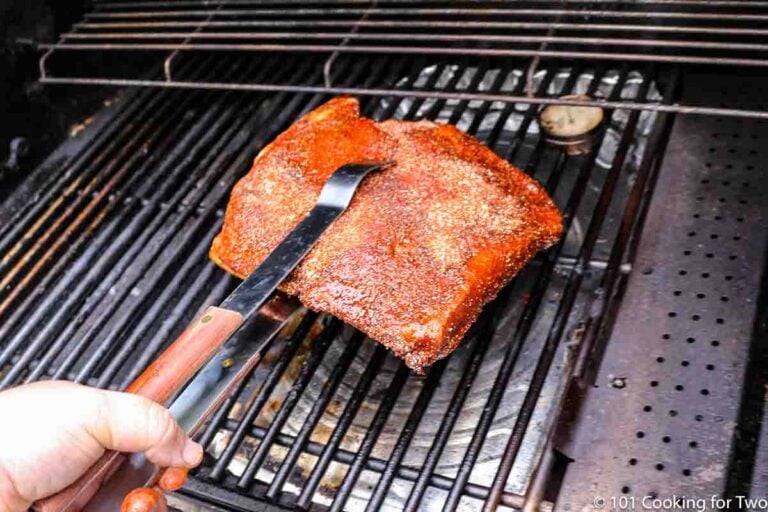
- Coat all sides of the brisket heavily with rub. If time allows, wrap in plastic and refrigerate for a few hours or overnight. Remove from the fridge about 1 hour before cooking.
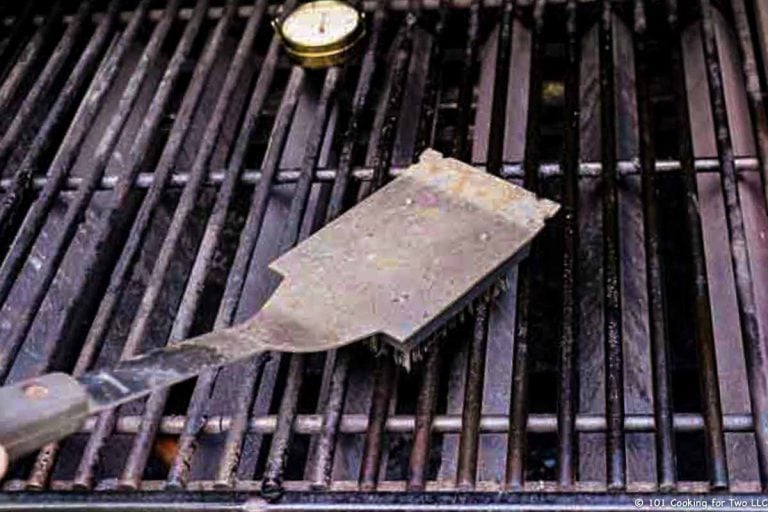
- While the brisket is resting, set up the grill for a steady temperature of about 225°–250°F with indirect heat, a drip pan on the indirect side, and a way to create smoke (optional).
- Place the brisket on the indirect side, over the drip pan.
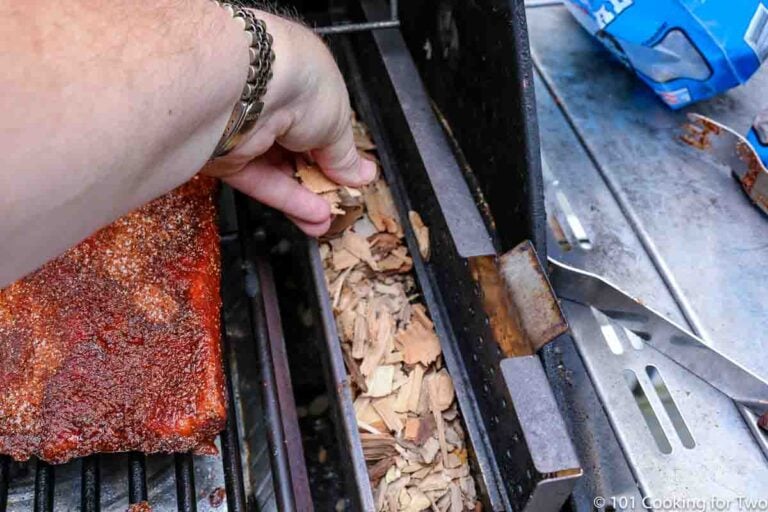
- Add smoke (optional): Use a smoker box or foil packet for 1–2 hours of wood smoke using hickory, mesquite, or fruit woods.
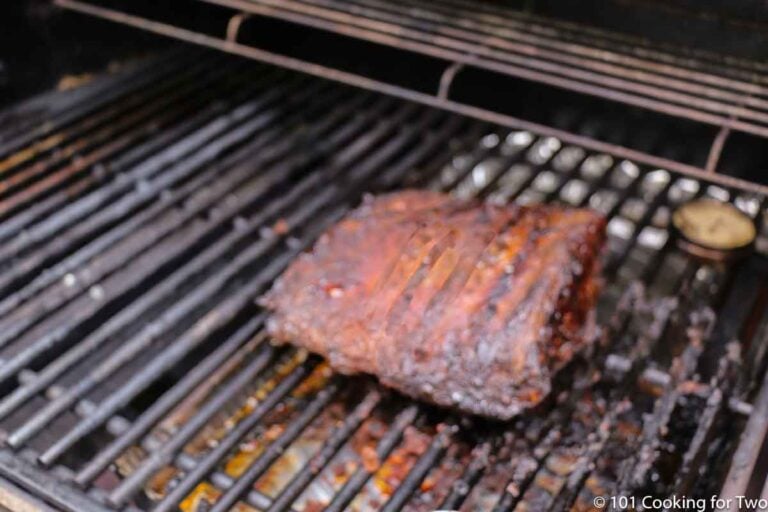
- Cook to an internal temperature of 200°–205°F, approximately 6 hours, for a 5-pound brisket.
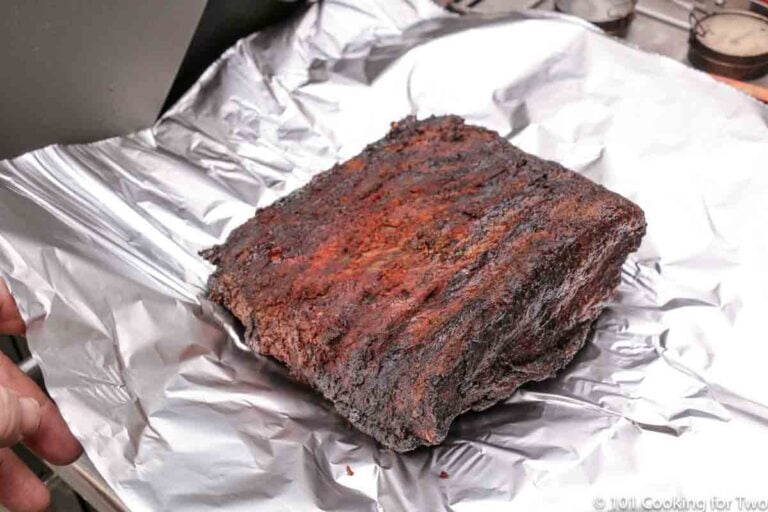
- Remove from the grill, wrap in foil and towels, and rest 1–2 hours.
- Remove any fat layer, then cut the meat thinly across the grain or chop it to serve.
Recipe Notes
Pro Tips
- Grill setup is the most important step – indirect heat and steady low-and-slow temps are key.
- Use any rub you like, but the simple one provided works well.
- Expect 1–1½ hours per pound as a rough time estimate.
- Be sure to wrap and let sit after cooking for 1–2 hours. But the absolute minimum is 20 minutes.
- You must cut across the grain or chop to serve.
- See the post for details on injecting, brining, the stall, and the Texas Crutch.
- For serving size: cook ½ pound per person, but double or triple for teenage boys. And you want leftovers.
- Whole packer briskets (8–12 lbs) may take 12–16 hours – see the main post for tips.
- Storage: Refrigerate up to 4 days, freeze up to 4 months.
- Need help? Please see How to Set Up a Gas Grill for Smoking and A Beginners Guide to Grill Temperature on a Gas Grill for low and slow grill setup instructions if you need help.
Your Own Private Notes
To adjust the recipe size:
You can adjust the number of servings above; however, only the amount in the ingredient list is adjusted, not the instructions.
Nutrition Estimate (may vary)
Editor's Note: Originally Published July 28, 2014. Updated with expanded options, refreshed photos, and a table of contents to help navigation.
Jon Melvin says
Well Dr. Dan, I am going to give this a try starting EARLY Friday morning. I have read and am right now practicing my smoking technique/temp control on my Webber, I have the three burner genesis version that I have owned for 10+ years. Still works great and I have the smoker insert and smaller grate that goes with it. Still struggling a bit with “grate temp” but I did buy “Joes” grate thermometers and they seem to work well. Amazing the difference in the hood temp and grate temp (as you said). I also bought an instant read remote probe that is working well for my chickens so we’ll see how it goes. Using Apple Chunks for smoke. My brisket is 4.4lbs. I will be using my “go to girl, Jennifer Segal, Once Upon a Chef” for the rub. She has a great site but her “what I own” are pricy. She does however respond to every email. Which is a nice thing, not calling you out as this is the first time I have commented. I did sign up and all of your tutorials are fantastic. Thanks again, I will report on Saturday as I’m going to put it on the grill Friday for my 6’ tall ex volley ball player daughter and her 6’3” soon to be husband. Both serious meat eaters.
Jon
US Navy Retired
Ron says
Going to try this out today looks really good
Mick McCanlies says
Wow!
My wife and I moved to Portugal two years ago and have been wanting a great Brisket since we moved from Texas. This recipe is the bomb. Simple and very easy. Our biggest obstacle was finding a great butcher here in Portugal that had the right cut of meat since all the cuts are different than in the states. It's not called brisket here.
Followed the recipe and cook times and temps. Of course the temps here are in Celsius not Fahrenheit, so had to adjust on our end. Mastered it and wow, tender and tasty. The bark was awesome, my wife loved it, better than Texas brisket. We will be cooking this brisket regularly 😋. Thank you for the dry rub recipe, so easy and simple. My first time making a brisket, turned out to be the best we've had.
Obrigado,
Mick & Karen
Jacob says
Hi there,
Looking to try this recipe. After letting the brisket sit for 1-2 hours, do I reheat it? If so, how?
Dan Mikesell AKA DrDan says
Hi Jacob,
Welcome the the blog.
The rest before cutting is so you can cut it across the grain or chop it for eating. If it is hot, it will fall apart and be hard to process. Also, the melted connective tissue needs to reabsorb for tender meat.
After you have sliced or chopped the brisket, you can follow https://www.101cookingfortwo.com/cook-brisket-gas-grill/#❄%EF%B8%8Fstorage-and-reheating-leftovers .
This recipe post is on the schedule for an update in the next month... the recipe will stay the same but I will be adding more on cutting a brisket and how to serve. You can see a version of what will be added on the oven baked brisket recipe at https://www.101cookingfortwo.com/oven-baked-kansas-city-bbq-beef-brisket/
Hope that helps.
Dan
Susanne McIntyre says
Why do I need to add smoke when slow cooking a brisket on a gas grill? I want a slow-cooked tender brisket, but I'm not that crazy about smoke flavor or wood flavor. The main reason I have a gas grill because I don't care for charcoal flavor. Thank you.
Dan Mikesell AKA DrDan says
Hi Susanne,
Welcome to the blog.
You definitely DO NOT have to smoke. It is usually done, but by no means mandatory. So, cook it your way.
Dan
Peggy says
Used your recipe today, and it was awesome! A little breeze out here by the coast made it a challenge to keep my pit lit at such a low temp, but overall, just wonderful!
Matt says
Thanks, this technique and explanation is fantastic! Haven't done it for a few years and these instructions are great. Thanks for posting this.
Chel says
Yea i did your recipe with a 40$ brisket. It turned to charcoal...
Dan Mikesell AKA DrDan says
Hi Chel,
Sorry, you had an issue. The most common reason is the wrong temperatures, and thermometers are not always accurate. So first, ensure your grill surface temperature is correct and the grill is set up correctly. Please review the referenced article on low and slow cooking. Check thermometers for accuracy. Grill surface thermometer in an oven and meat thermometers in boiling water.
Can you share the grill and meat temperatures you were seeing? How long was the cooking time and size of the brisket?
Dan