
This roasted turkey breast recipe gives you juicy, tender meat and crispy skin with an easy oven method that works for any size bone-in breast.
Roast at one steady 350°F—no changing oven temperatures. Breaking back the ribs stabilizes the breast for even roasting, and the simple method is perfect for Thanksgiving or any smaller holiday meal.
🤔 Quick Answer: How Long to Roast Turkey Breast in the Oven
Roast a bone-in turkey breast in a 350°F oven for about 16–20 minutes per pound, until the thickest part reaches 165°F.
- 5 to 6 pounds: about 1 hour 30 minutes to 1 hour 45 minutes
- 7 to 8 pounds: about 2 to 2 hours 15 minutes
- 9 to 10 pounds: about 2 hours 15 minutes to 2 hours 30 minutes
“Alternative: You can roast at 325°F, but it will take a little longer.”
Jump To (scroll for more)
- 🤔 Quick Answer: How Long to Roast Turkey Breast in the Oven
- 📝 TL;DR — Recipe Summary
- 🦃 Ingredients
- 👨🍳Quick Overview: How to Roast a Bone-In Turkey Breast
- 🌡️ Best Oven Temperature for Turkey Breast (350°F)
- 🌡️ Turkey Breast Internal Temperature
- 😊 Tips for the Best Results
- 🧂 Seasoning a Turkey Breast
- 🦃 How Much Turkey Breast Per Person?
- ❄️ How to Thaw a Turkey Breast
- 🧂 Should You Brine a Turkey Breast?
- 🥣 How to Make Turkey Gravy
- 🍴 Serving and Related Recipes
- ❄️ Storage and Leftovers
- ❓ FAQs
- ⚕️Food Safety
- 📖The Recipe Card

Featured Comment from Norma :
⭐⭐⭐⭐⭐"This is the best, most straightforward instruction I have seen.
Thank you."
📝 TL;DR — Recipe Summary
- What: A classic oven-roasted bone-in turkey breast with crispy skin and juicy, tender meat and a gravy option.
- Why: An easy method for a smaller holiday meal or anytime you want turkey without roasting a whole bird.
- How: Trim and break back the ribs to stabilize the breast while cooking, season, and roast at 350°F to 165°F in the thickest part.
🦃 Ingredients
- Turkey breast — bone-in, 5 to 10 pounds, fully thawed.
- Butter or oil — for brushing before and during roasting.
- Seasoning — kosher salt is all you need, or add herbs such as thyme, rosemary, or sage.
- For gravy (optional) — all-purpose flour, broth, salt, and pepper. Use turkey broth if available or chicken broth.
👨🍳Quick Overview: How to Roast a Bone-In Turkey Breast
1. Prep
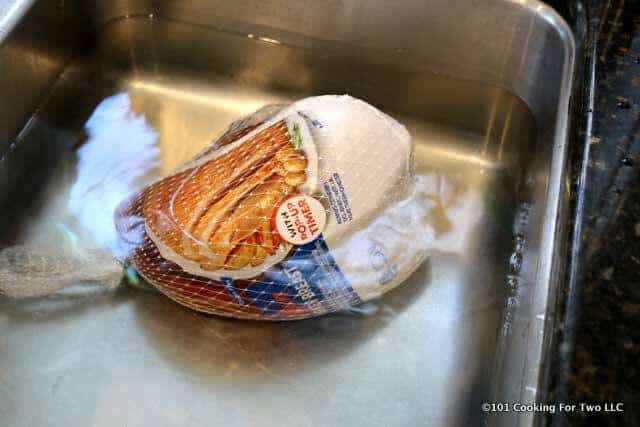
Completely thaw the turkey breast. Preheat the oven to 350°F and prepare a roasting pan with a rack, if available.
2. Remove the Backbone and Break Back the Ribs
Cut out the backbone using a heavy knife or kitchen shears. Use firm pressure to break back the rib sections so the breast sits flat and stable.
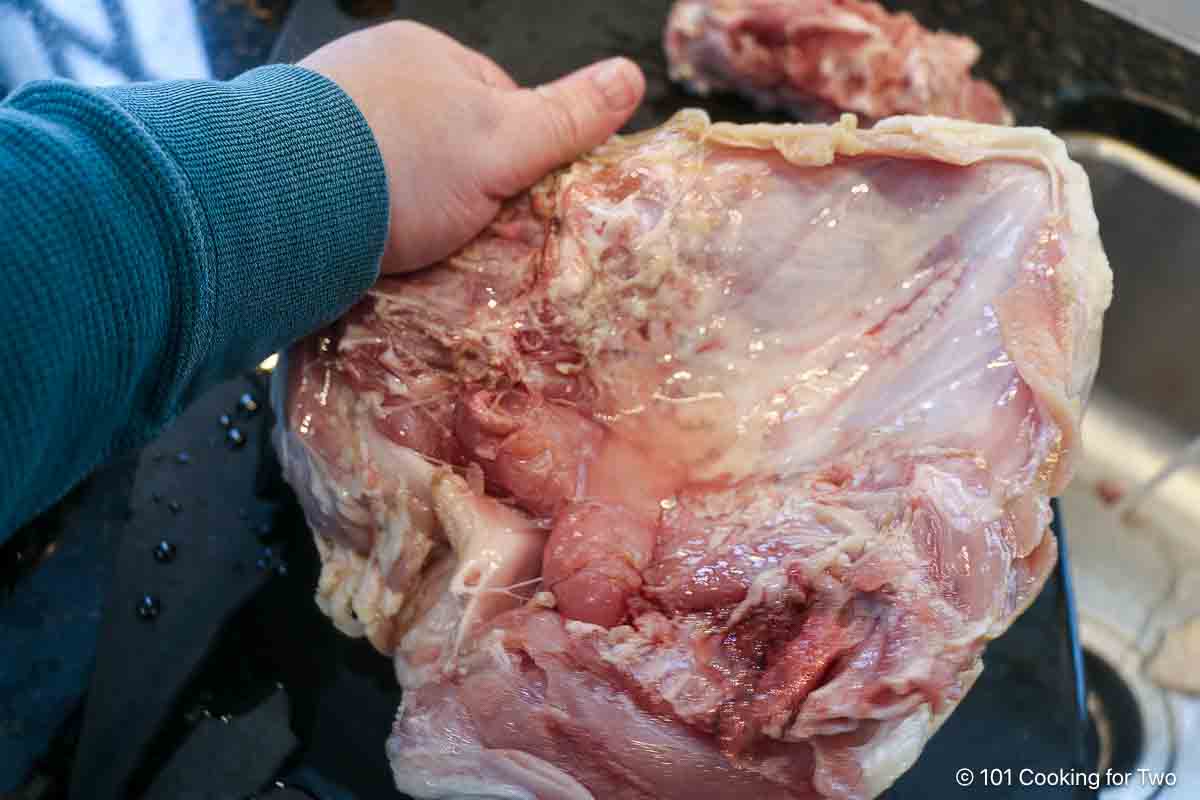
✅ Pro Tip: The natural weak spot is about an inch from the breastbone. Fold the ribs back to help support the breast while roasting.
3. Season
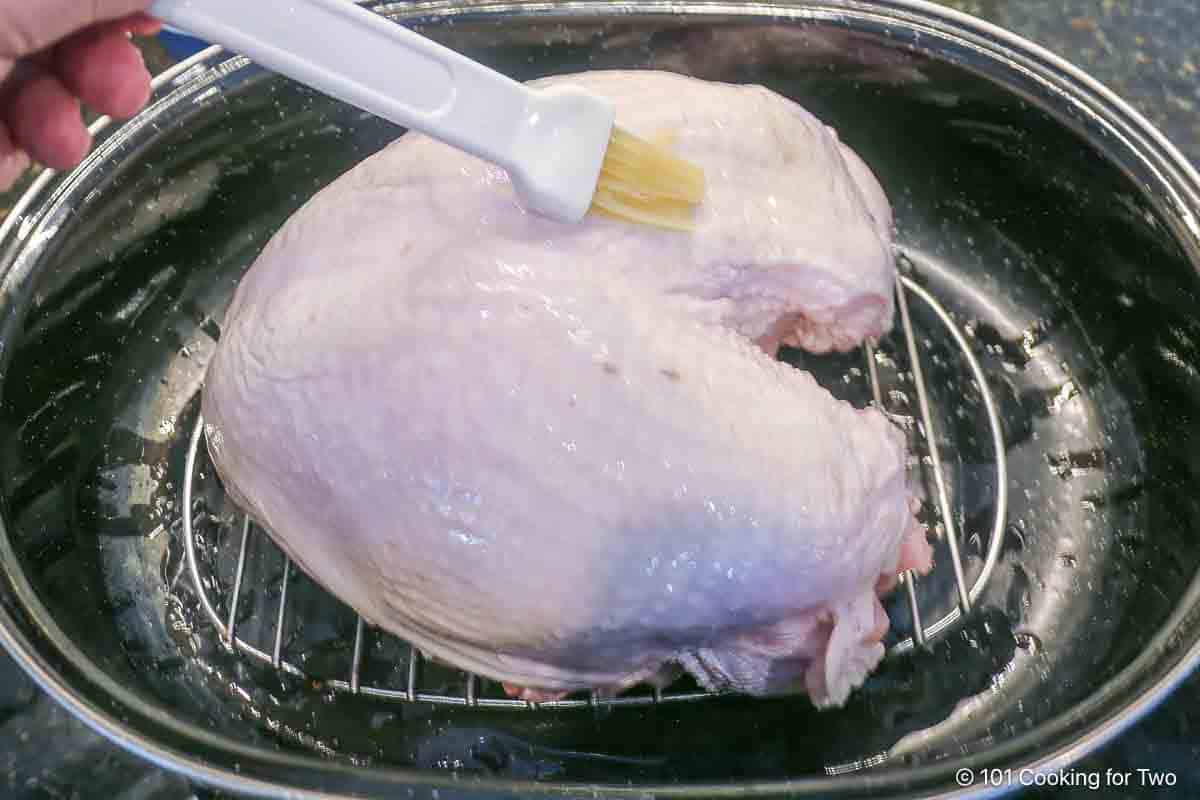
Brush with oil or melted butter and sprinkle with kosher salt. Add herbs or other seasoning if desired.
4. Roast
Roast at 350°F until the thickest part reaches 165°F—a 7-pound breast will take about 2 hours.
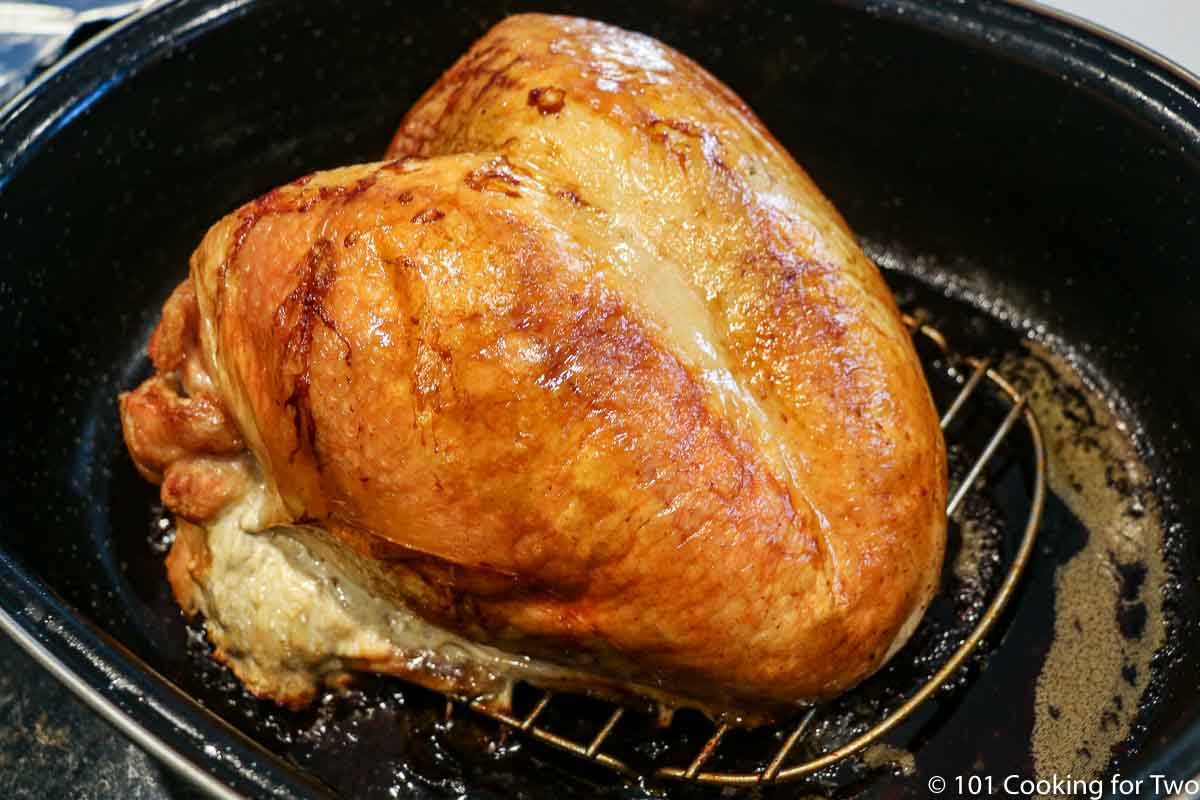
✅ Pro Tip: Basting isn't required, but I like to brush on a little more butter or oil halfway through. Rotate the pan 180° to compensate for oven hot spots—most ovens have them.
5. Rest
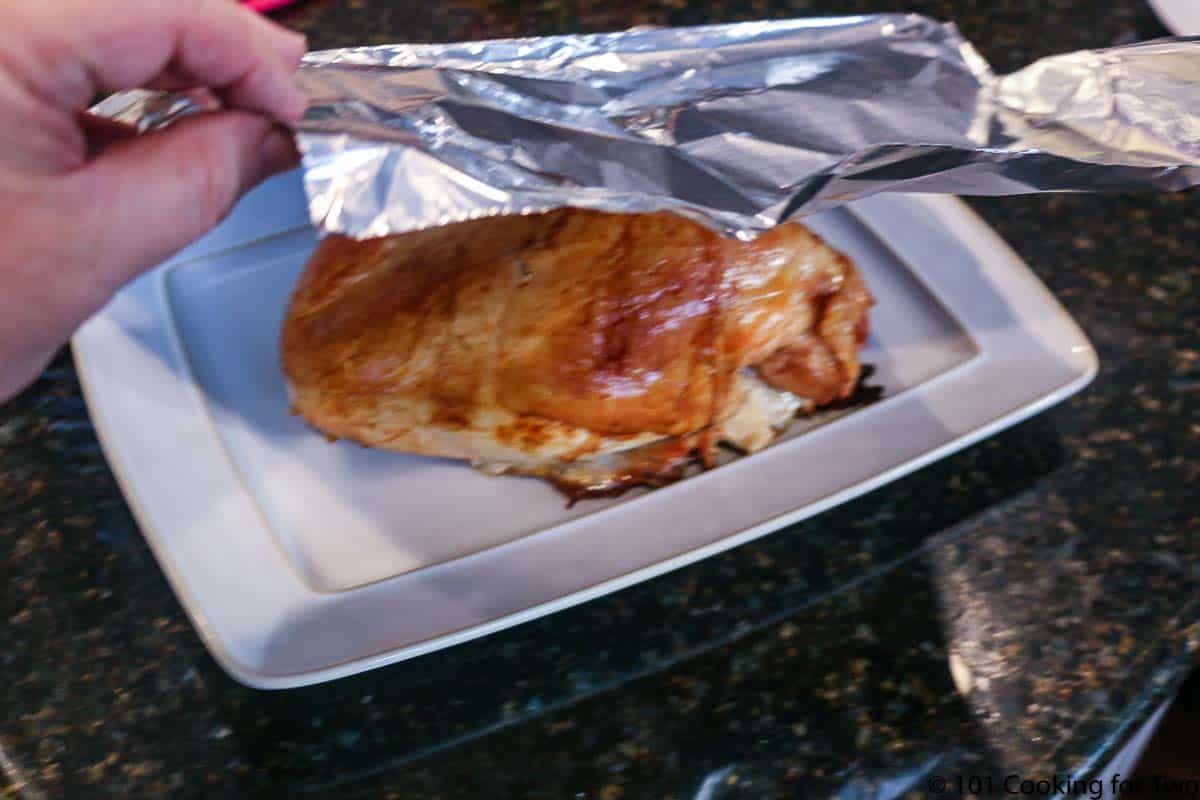
Let rest, tented with foil, for 10–15 minutes before carving. Perfect time to make gravy—see the recipe card for instructions.
👇 Scroll down for the printable recipe card and step-by-step photo instructions—or keep reading for extra tips, veggie sides, and serving ideas.
🌡️ Best Oven Temperature for Turkey Breast (350°F)
I recommend roasting turkey breast at 350°F. It gives the skin time to brown while the meat cooks evenly, without changing oven temperatures or routinely needing to tent with foil to prevent over-browning.
Starting at a higher oven temperature for browning and then reducing the heat usually just means tenting the browned skin with foil longer.
You can roast at 325°F, but it will take a little longer, and the skin may not brown as well.
🌡️ Turkey Breast Internal Temperature
A turkey breast is done when the thickest part reaches 165°F. Check with an instant-read thermometer, making sure the probe is in the meat and not touching bone. The USDA recommends a minimum internal temperature of 165°F for turkey and other poultry.
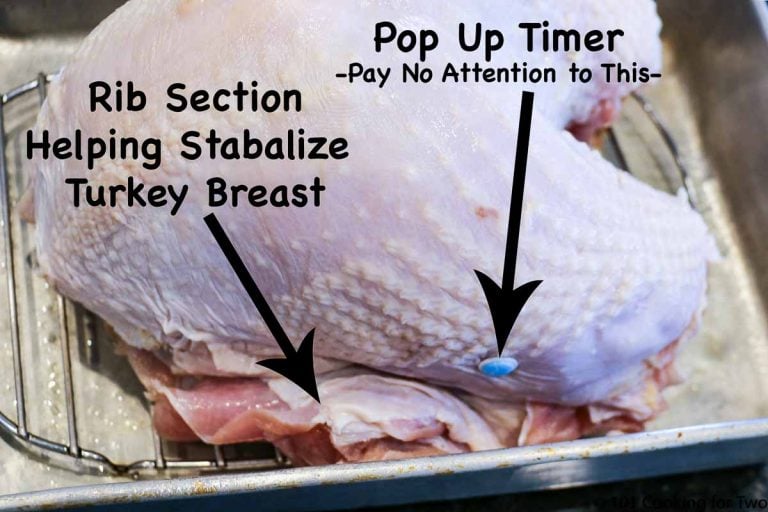
Don't rely on a pop-up timer. Pop-up timers can be inaccurate. Cook by temperature, not estimated cooking time.
Don’t judge by color. Fully cooked turkey can still look slightly pink near the bone. That’s from natural compounds like myoglobin, not undercooking. If the internal temp is 165°F, it’s safe regardless of color.
😊 Tips for the Best Results
- Cooking time depends on thickness as well as weight. A thicker turkey breast may take longer than another breast of the same weight. Use the estimated times for planning, but always cook to 165°F.
- Tent only if needed. If the skin is getting too brown before the turkey reaches 165°F, loosely cover the browned area with foil for the rest of the roasting time.
- Don’t trust the pop-up timer—but don’t pull it out either. It can be inaccurate, and removing it leaves a hole that can let juices leak out. Ignore it and use an instant-read thermometer instead.
- Position the breast in the center of the oven. Since a turkey breast is tall, this usually means placing the oven rack one or two positions below center.
🧂 Seasoning a Turkey Breast
For a classic roasted turkey breast, all you need is kosher salt and butter or oil. Butter adds flavor, while oil helps the skin get a little crispier.
For more flavor, add sage, thyme, rosemary, garlic, or your favorite poultry seasoning. You can also put herb butter under the skin, but it isn't necessary for juicy turkey.
Save this recipe!
🦃 How Much Turkey Breast Per Person?
Plan on about ¾ to 1 pound of bone-in turkey breast per person. Use the higher end if you want generous portions or plenty of leftovers.
Remember that the bone adds to the weight, and holiday guests often have seconds. If leftovers are part of the plan—and they should be—buy a little extra.
❄️ How to Thaw a Turkey Breast
Refrigerator thawing is preferred. Leave the turkey breast unopened in its original packaging, place it on a tray, and allow about 2–3 days for a 5- to 7-pound breast. Larger breasts may need longer.
For faster thawing, keep the turkey sealed and submerge it in cold tap water, changing the water every 30 minutes. A 5- to 7-pound breast will usually take about 3–5 hours.
Never thaw turkey at room temperature or in warm water.
🧂 Should You Brine a Turkey Breast?
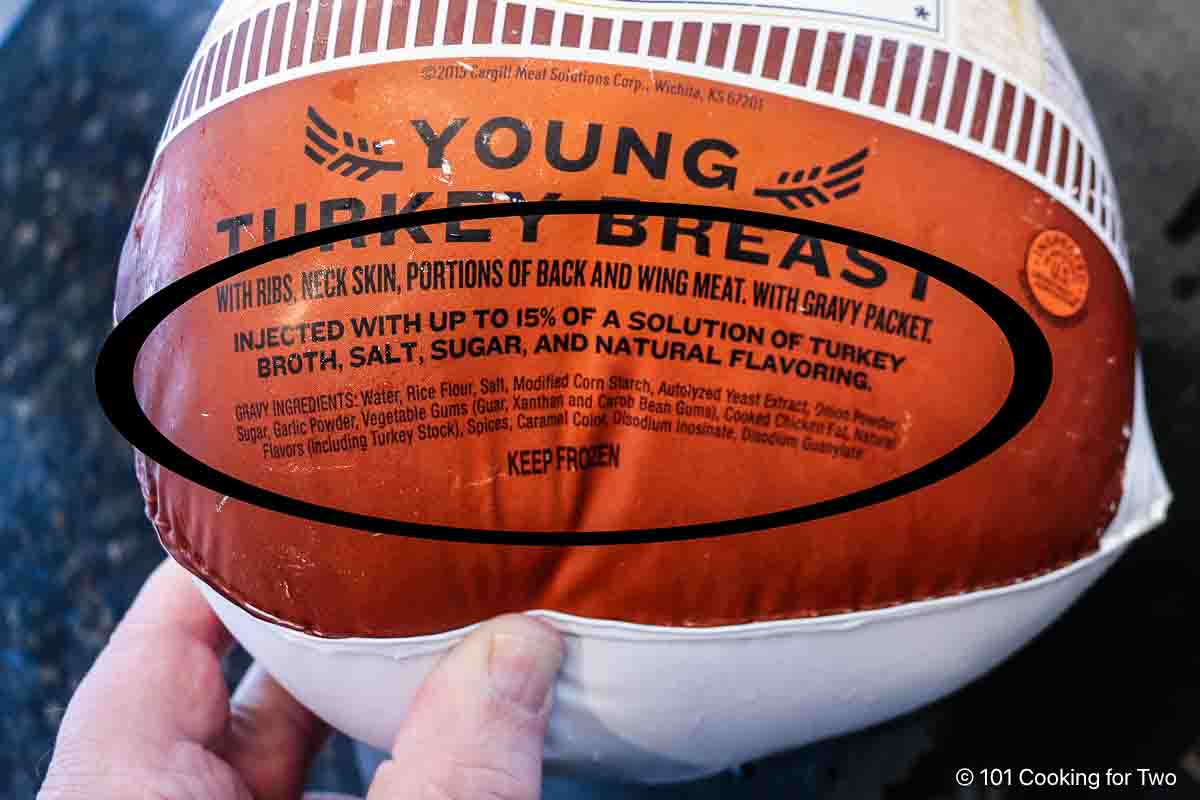
Usually not. Most frozen turkey breasts are already injected or pre-brined. Check the package for wording such as “injected” or “contains up to X% solution.” Don't brine these—they may become overly salty.
If you have a fresh, unbrined turkey breast, brining can help keep it moist. Use 1 gallon of water, 1 cup of salt, and ½ cup of sugar and brine for 12–24 hours.
🥣 How to Make Turkey Gravy
A turkey breast usually produces less pan drippings than a whole turkey, but you can still make excellent gravy. Combine the drippings with turkey or chicken broth, then thicken with an all-purpose flour slurry.
Full gravy instructions are in the recipe card. For more details, see How To Make Gravy at Home.
🍴 Serving and Related Recipes
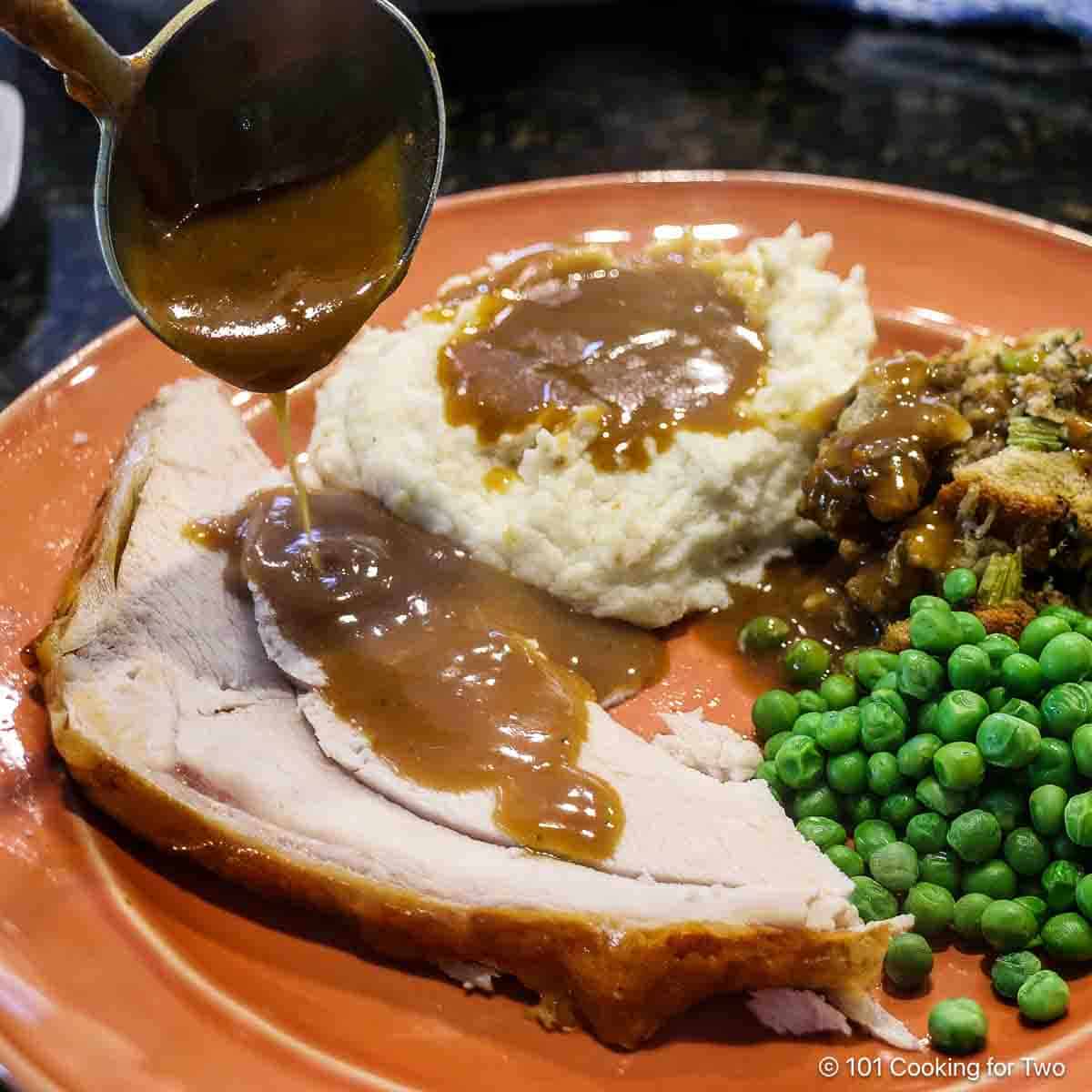
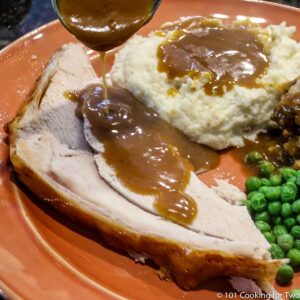
Roasted turkey breast is perfect for a smaller Thanksgiving or holiday meal. We always serve it with mashed potatoes, peas, and gravy.
Other favorite sides include:
❄️ Storage and Leftovers
Store leftover turkey in an airtight container in the refrigerator for up to 4 days or freeze for up to 4 months. Store leftover gravy separately.
For reheating, warm sliced or chopped turkey gently with a little gravy or broth to help keep it moist.
Recipes for Leftover Turkey
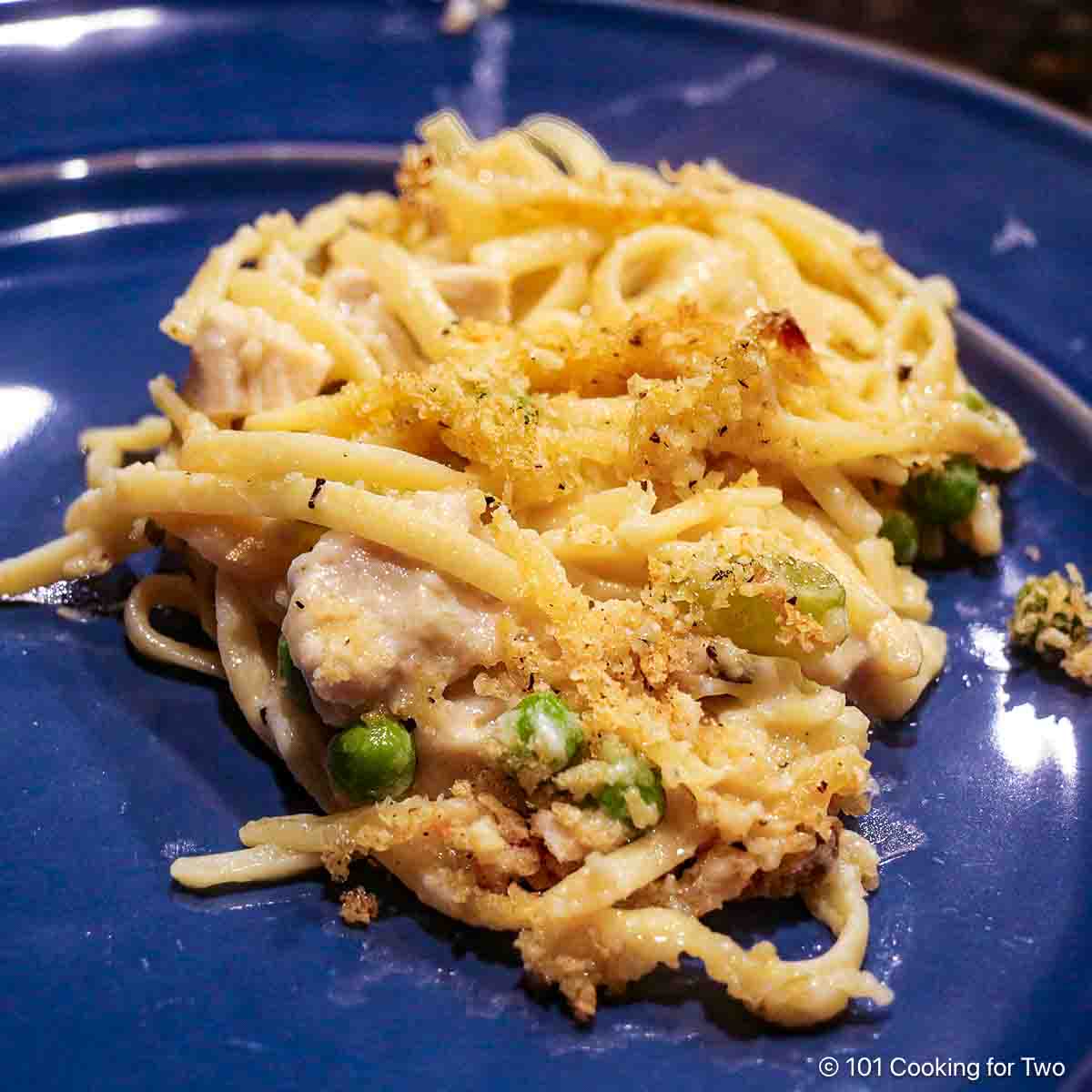
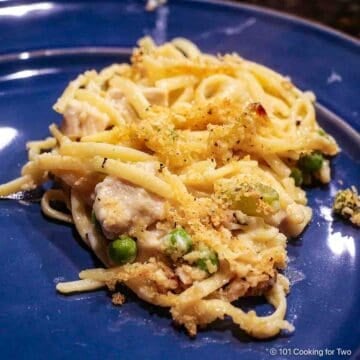
Easy Turkey Tetrazzini
Turkey Tetrazzini is the perfect leftover Thanksgiving turkey recipe. It features tender turkey, creamy sauce, pasta, vegetables, and a crispy Parmesan topping. You may want to cook extra turkey this year for this casserole.
- Double Crust Chicken Pot Pie: Substitute leftover turkey for the chicken.
- Chicken Broccoli Rice Casserole: Substitute chopped turkey for the chicken.
❓ FAQs
Yes, but this recipe is designed for a bone-in turkey breast. Boneless breasts can be roasted at 350°F to 165°F, but they usually cook faster. Start checking the internal temperature earlier.
No. Roast uncovered so the skin can brown. If the skin becomes too brown before the breast reaches 165°F, loosely tent just the browned area with foil.
I don't recommend it. Stuffing must also reach 165°F, which can result in an overcooked turkey breast. For better control of both the turkey and stuffing, cook the stuffing separately.
⚕️Food Safety
Treat all raw turkey as contaminated. Wash your hands and surfaces thoroughly after handling it, but don't rinse the turkey—rinsing can spread bacteria around the kitchen through splatter. For more, see Chicken… To Rinse or Not To Rinse?
Cook turkey to a safe internal temperature of 165°F in the thickest part. See the Turkey Breast Internal Temperature section above for details.
📖The Recipe Card
Roasted Turkey Breast Recipe
Video Slideshow
Ingredients
- 5-10 pounds bone-in turkey breast - thawed
- 1 tablespoon oil or butter
- salt to taste - or seasoning of your choice
- ½ cup all-purpose flour
- 4 cups broth - turkey or chicken
- salt to taste
Step-by-Step Instructions
Prep
- Fully thaw the turkey breast before proceeding. Preheat oven to 350°F with the rack set low enough so the breast will sit in the center of the oven. Use a conventional oven setting, not convection.

Remove the Backbone and Break Back the Ribs
- Remove any gravy packet or extras. Cut out the backbone if present using kitchen shears or a heavy knife. If there's a pop-up timer, ignore it—but don’t remove it (that can cause juice loss).

- Trim off any excess skin, like the neck flap, and pat the breast dry with paper towels.

Break the rib sections
- Break back the rib sections to create a flat base. The weak point is about an inch from the breastbone—use firm pressure or a knife if needed.

- Place the breast in a roasting pan with a rack if available. For smaller breasts, a cake pan may work; larger ones need a full roasting pan. Spray rack and pan with cooking spray. Position the rib sections to help stabilize the breast upright.
Season and roast
- Brush with oil or melted butter, then season with kosher salt (and any other herbs or spices if using).

- Roast uncovered in the center of the oven. After 1 hour, rotate the pan 180° and brush again with butter or oil. Check the color and temp at 90 minutes—if the skin is browning too fast, tent lightly with foil.

- Continue roasting until an internal temperature of 165°F is reached in the thickest part—usually 16 to 20 minutes per pound.

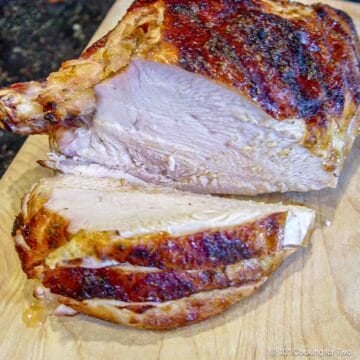
- Remove from the oven and tent lightly with foil. Let rest 10–15 minutes before carving.

Optional Gravy
- While the turkey rests, whisk ½ cup flour into 2 cups of broth to make a slurry. Add the remaining 2 cups of broth to any drippings in the pan. Bring to a boil over medium-high heat.

- Decrease the heat to medium and slowly add most of the broth-flour mixture, whisking continuously. Add more later if needed. Season with salt and pepper to taste. After thickened, simmer for a few minutes to cook the flour.

- Slice the turkey and serve hot with gravy.

Recipe Notes
Pro Tips:
Cooking time: Allow about 16–20 minutes per pound, but thickness affects cooking time. Always cook to 165°F, not by time alone. Thawing: The turkey breast must be fully thawed before roasting. See the post for safe thawing methods. Brining: Only brine if you're sure the turkey hasn't already been injected or pre-brined. Storage: Refrigerate leftover turkey and gravy for up to 4 days or freeze for up to 4 months. Nutrition: Based on a ½-pound serving of turkey and ⅓ cup gravy.Your Own Private Notes
To adjust the recipe size:
You can adjust the number of servings above; however, only the amount in the ingredient list is adjusted, not the instructions.
Nutrition Estimate (may vary)
Editor's Note: First Published on March 25, 2018. Updated with expanded options, refreshed photos, and a table of contents to help navigation.


Lee says
I would like to make my turkey beasts the day before I need it. Any suggestions on how long to cook and then heat up when needed.
Dan Mikesell AKA DrDan says
Hi Lee,
Welcome to the blog.
Yes, you can. If you do a Google search, you will find some instructions. You will basically cook fully, cool completely, carve into larger pieces, sprinkle with some broth, cover tight and refrigerate. Reheat still covered at 325-350 to serving temperature. The skin will not do well but the meat should be good. If you don't carve ahead, heating the center of the meat will take about the same time as cooking.
The reheat will take about 45-60 minutes I suspect (I never did a full breast or bird ahead). I would only do this if I was traveling/taking it somewhere. Cooking fresh doesn't take a whole lot longer.
Hope that helps.
Dan
Gerry says
Even tho I've done turkey breast before, this recipe had several good tips. Also I like the fact that the recipes in general are for two. I'm only one, but an extra helping for another nite's quick dinner is my idea of easy cooking.
Gail says
I roasted a 6.5 lb turkey breast following these instructions, but it did not work out as well as I had hoped. I had defrosted the turkey in the refrigerator for about 1.5 days. Then I wet brined it using kosher salt according to the SeriousEats proportions (1.25 cups kosher salt to 1 gallon water) for 8 hours. I thoroughly rinsed off all the brining solution and then dried it well and air dried it in the refrigerator for another day. I took the bird out of the refrigerator 1.5 hours before I planned to roast it. I brushed the skin well with clarified butter, scattered onions and celery and shallots under the rack which held the bird and poured in some water to keep the veggies from scorching.
I then followed these roasting instructions. Based on the 5 lb. bird mentioned here which took 20 minutes per pound, I took it out after 1 hour and 45 minutes and the temperature was already at 185 degrees. I was so upset, thinking the meat would be tough and dry. However, the brining saved me. It was juicy enough when served and very tasty because we did not wait to let it rest and just carved it after waiting about 10 minutes. The skin was golden brown, very nice.
I think the instructions should be modified to start to take the temperature based on 15-16 minutes per pound total roasting time. [Part of this comment removed for food safety issues- DrDan]
I will follow this method again with the change I recommend and post back here again. Thanks for posting these instructions DrDan!
Dan Mikesell AKA DrDan says
Hi Gail,
Welcome to the blog. I do have a number of comments.
1) Almost all frozen turkey breast are injected or brined already. There are a few but not many (I have never seen one) So, you should not be brining an already injected/brined breast.
2) The breast is overdone at 185 but turkey is very forgiving especially if injected or brined.
3) The primary reason your breast was overdone is the 1.5 hour rest at room temperature. So you gave the turkey a "headstart" on getting up to temperature. So normally the refrigerated breast is 35-40 degrees when it goes in the oven. Assuming yours was about 55-60 degrees when it went in the oven, that is 15-25 degrees headstart on getting to temp. That accounts for the 20 degrees you were over.
4) I will play my doctor card here having seen lots of food poisoning in my time. FDA is correct.
5) I have removed some of your comments since I consider it dangerous if followed. I will leave your poor rating for now but this recipe and instructions were not followed. (you had rate twice, in the card and comment. One delete)
I hope I have convinced you not to follow the dangerous instructions you found on another site.
DrDan
Norma says
This is the best, most straightforward instruction I have seen.
Thank you
K.D. says
Thank you for sharing this information..I will be roasting our turkey breast, & these instructions seem like the BEST of all I have read..Will post the results on Friday. Happy Thanksgiving to you & yours🥰
Roberta says
Amazing, simple instructions for cooking turkey. Everyone else seems to be going overboard with herbs and spices and brines and rubs and sauces. And there must be a dozen "new and improved" ways to roast turkey. This is the way my Dad and my Granny roasted their birds, and it's a trip down memory lane. Thanks!
Michael Clark says
I like the way you explain how to cook the turkey, but my problem is I am cooking in an electric roaster, not an oven; Would you change the temp or any other procedure, or run it the same as for a regular oven? Thanks for any help you can provide.
Dan Mikesell AKA DrDan says
Hi Michael,
Welcome to the blog.
I have a roaster, so you have the other one. I had to say that. I have never really used the roaster to cook. I use mine to keep food (like my chicken for a hundred) warm in the safe food zone without cooking. I have a long discussion on them on that post.
Having said that, I would just think of it as an odd looking oven (it is) and do it about the same. I wouldn't rotate or baste since I don't want to lose all the heat. So a remote thermometer would be good. I suspect the skin won't be very good since all the moisture that is trapped.
If you do it, post about it. Inquiring minds want to know.
Thanks for the interesting question and the rating.
Dan
Tim Meehan says
Pure joy, love it! Great, practical advice. All worked like a charm. This is my third one and pretty sure your site is the one I used before. A lot of "junk" on the internet, but this was well worth it!!! I saved it to my phone because I'll probably forget by next time , lol single, old guy. Thanks, Tim
DrDan says
Hi Tim,
Welcome to the blog.
I learned many years ago to be straight forward and complete. I try to make things like this recipe so visitors can see themselves do the recipe before they actually do it. So it is almost like doing it a second time.
Glad you enjoyed it.
Thanks for the note and rating.
Dan
Eloise says
Thank you for this wonderful recipe. The Turkey breast filled my entire home with such a delicious aroma. I made this for our Sunday dinner it was the star of the meal.
DrDan says
Hi Eloise,
Welcome to the blog.
Glad it worked well for you and thanks for the note.
Dan
Mary Lou says
This is sooo good. I made the mistake of cooking past 165 and it was still juicy. The hardest part for me was taking out the backbone-I didn't have a tough enough scissor or the right knife. If you buy a fresh breast have the butcher do it.
DrDan says
Hi Mary Lou,
Welcome to the blog.
I have a couple of pairs of very sharp kitchen shears that work great but they are "heavy". Those light ones just won't do it.
Thanks for the note.
Dan
Connie says
The step by step instructions, with photos, are very helpful. I have cooked many a turkey breast, but never thought about removing the backbone and flattening the breast. The solution for gravy without the benefit of drippings is appreciated. I look forward to more recipes.
FIVE stars, but can not locate where to enter them. MERRY CHRISTMAS
DrDan says
Hi Connie,
Welcome to the blog.
I like step by step photos. Readers can just take their time and understand the instructions. I don't do videos since I don't see them as useful in the long run.
Glad you find the tips useful. The rating is by clicking the star you want in the the recipe card.
Thanks for the note, enjoy your turkey and Merry Christmas to you.
Dan
Kathy says
Would you recommend an unbridled turkey breast for people on a low sodium diet and if so, how can I keep it moist?
DrDan says
Hi Kathy,
Welcome to the blog.
The first part of your question is really medical. How much of a sodium restriction are you are on. This will vary by why you are on the diet and other medical issues. Your doctor will have a recommendation for you. I, a retired pediatrician, really can't answer it for you.
Brined turkey will add about 350-400 mg of sodium to the serving. A 4 oz serving of Butterball turkey breast (frozen, pre-injected) is 410 mg. Roasted turkey breast without brine or injection is 71 mg per my reference.
So sorry no solid anwser for you. It is hard (around me at least) to find a non-injected turkey breast. Even the fresh ones are frequently injected.
Hope that helps somewhat.
Dan
Celeste says
Where's the "like" button? Great article. : )
DrDan says
Hi Celeste,
Welcome to the blog.
Thanks for the compliment. The rating is in the "recipe card" area. Click on the star you want (obviously the star on the right for a 5 :) ).
Have a great holiday.
Dan
Marilyn Lund says
i have not made this yet but plan to, will let you know when I do I just found your web site. This is the first time I found a simple basic recipe with good instructions and no ingredients I don't have and never heard of. I am looking forward to being part of this group and am excited to check out other recipes.
Thank You
Marilyn Lund
DrDan says
Hi Marilyn,
Welcome to the blog.
I try to do simple and basic recipes. Once you master that, you can go fancier.
Let me know if you have any questions. And thanks for the note.
Dan
Sandi Hemming says
I am thinking of begging my husband for two golden pups. One for each of us. Thank you for the wonderful pictures of your beautiful dogs!
I am new to your blog. I just purchased the All-Clad Prep and Cook. I’ve read about similar cookers around the world (some so expensive I thought I would never get one. We’ve had ours for about a month. I find their cookbook mostly things I’ll never make. So I’m signing up for every blog using one. Thank you for helping we newbies!
DrDan says
Hi Sandi,
Welcome to the blog. And Molly (my wife's dog) and Lilly (my dog) say thanks and you should do it. There is nothing like have your sister adopted with you.
I hate those cookbooks that come with things that are recipes for things that you never have heard of or even think of cooking, They just need to fill the book I guess. But occasionally you will find a gem in the weeds.
I doubt you will find many recipes (at least on blogs) specifically for a Prep and Cook. The market would be "limited". It is hard enough for blogs to get traffic for general use recipe without limiting to such a small audience. But you may find some that would work. Good luck with your search.
Dan
Michele @ Queenbeebaker says
I love turkey! This looks so delicious and easy. Cannot wait to try your instructions.
Judy says
You have made such a difference in my life. I was sick of cooking. Now I check your blog often for straightforward, delicious recipes. Thank you. Best wishes to you and your garlic loving wife.
DrDan says
Hi Judy,
I'm blushing and you just can't see it.
I hope you continue to enjoy my offerings. I try to be simple and straightforward with everything and to present it with some joy and love.
Please let me know if you have any questions or comments.
Thanks for the wonderful note.
Dan